

Interview with Lee Knox Ostertag
By Miny Readsalot and Cielo Maria
Edited by Carly Zimmerman
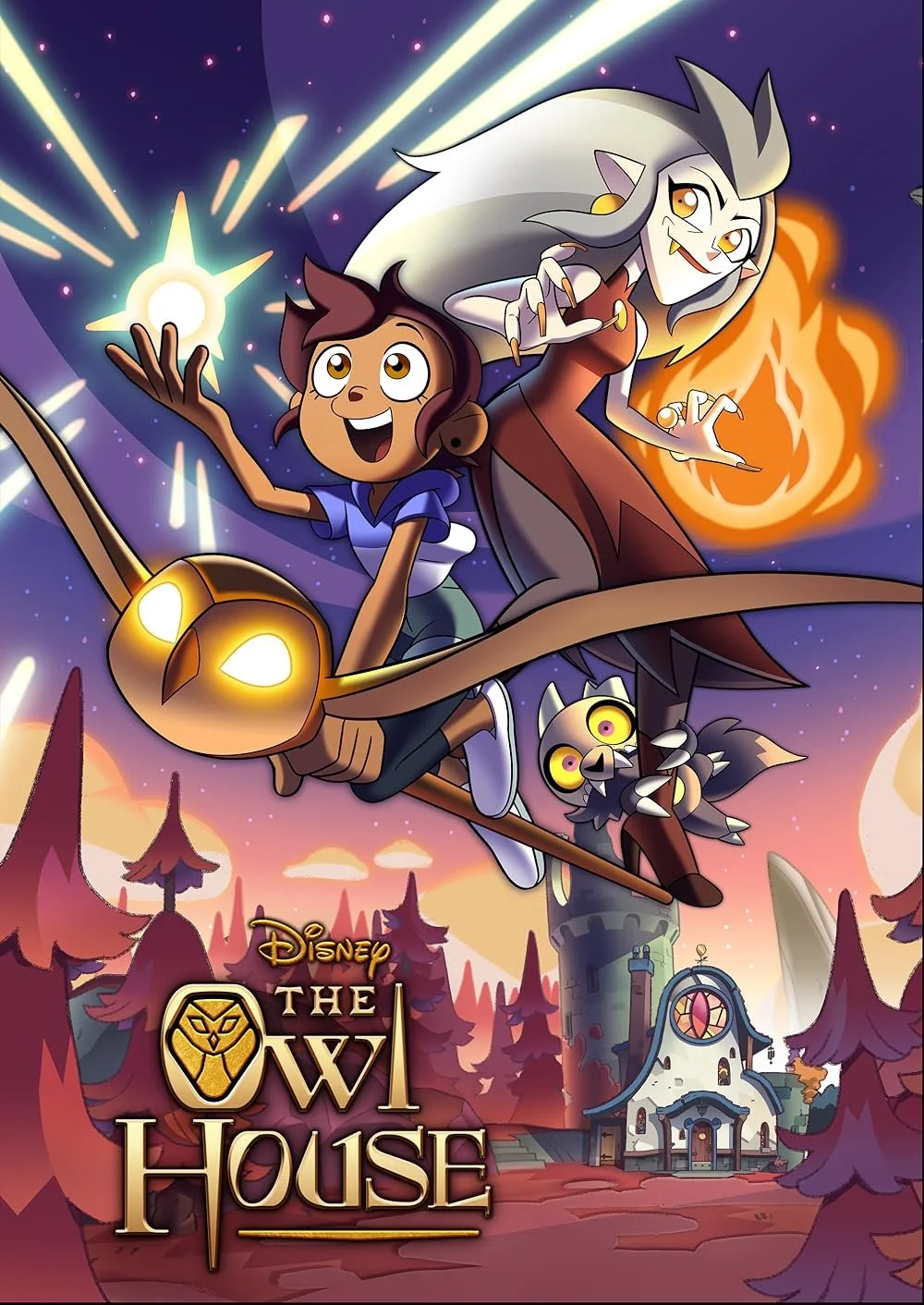
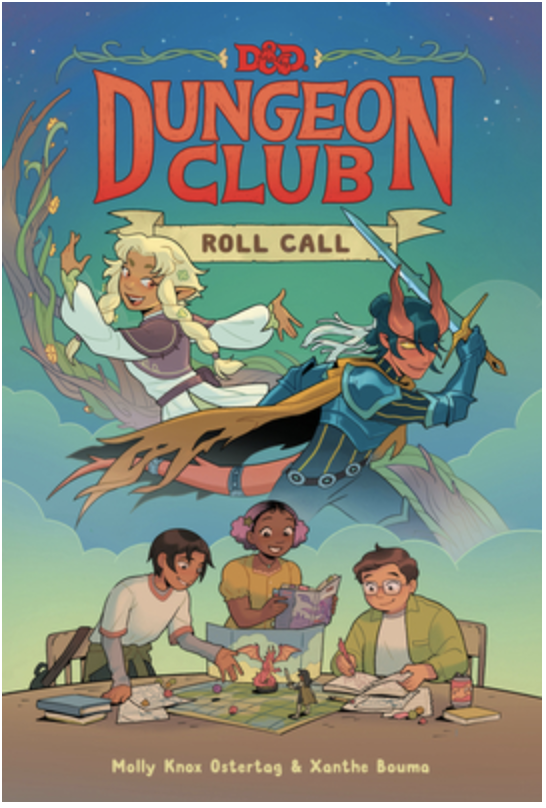
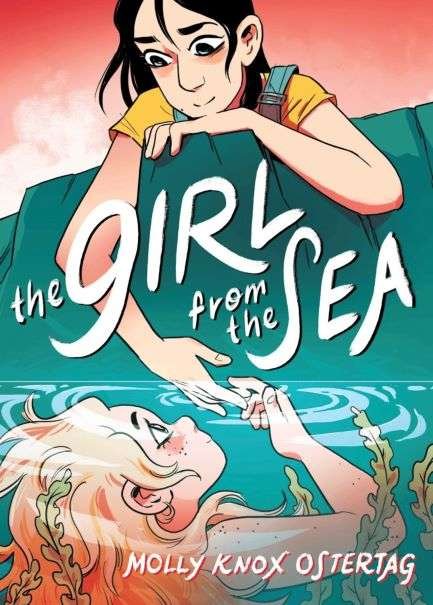
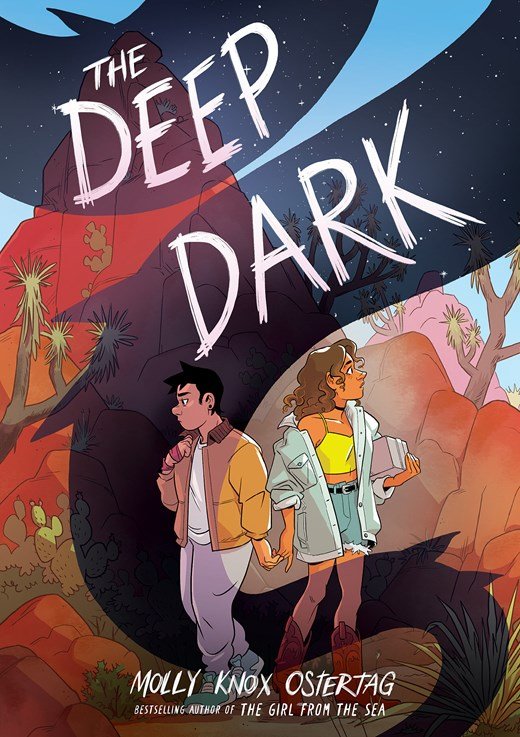
We were able to sit down with Lee Knox Ostertag, author and illustrator of The Deep Dark, The Witch Boy series, The Girl From the Sea, and author of the Dungeon Club series illustrated by Xanthe Bouma. Lee has also written for The Owl House and we discussed the craft behind graphic novels and animated shows, reality TV, and what he wants for the future of trans graphic novels.
Cielo: Lee, can you tell us a little bit about yourself for people who might not be familiar with you?
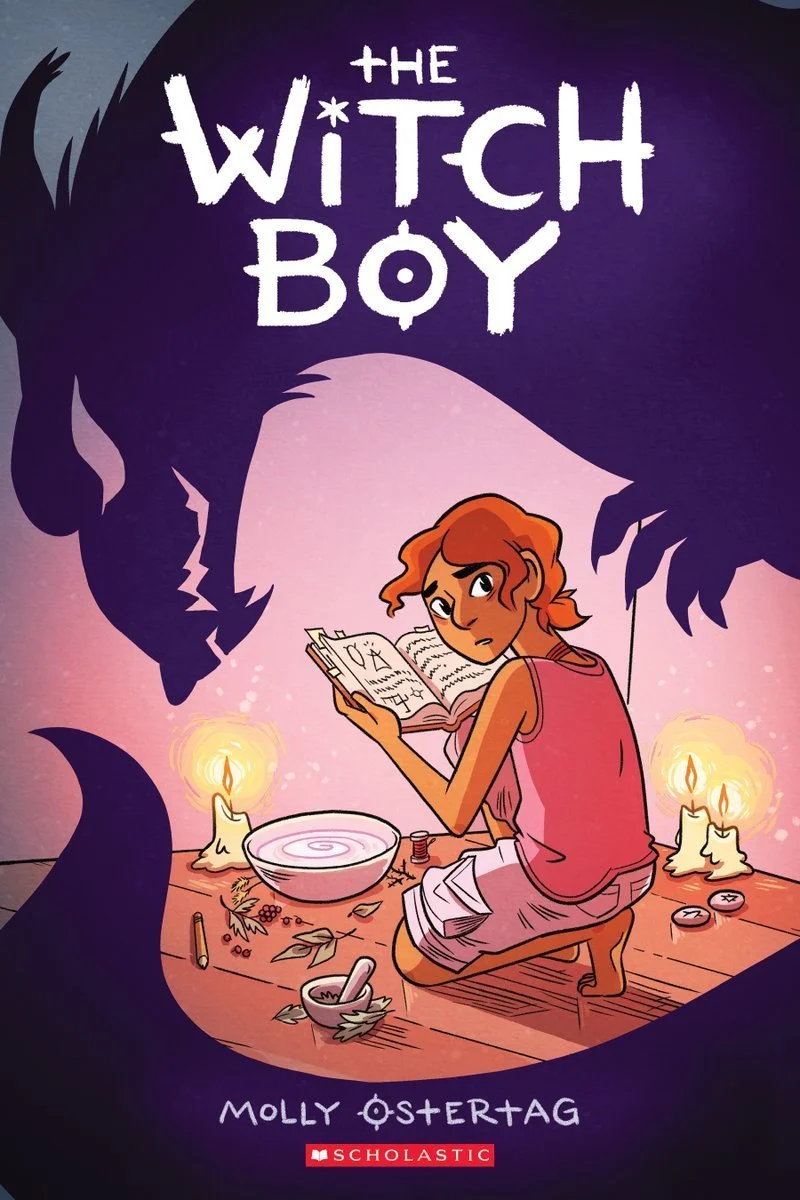
Lee: I’m Lee Knox Ostertag, I’m a graphic novelist, primarily. My works are The Witch Boy series for middle grade, which is a magical adventure about gender roles and finding yourself and finding friends; The Girl From the Sea, a romance between two girls, one of whom is a selkie, which means you can turn into a seal on whim; and The Deep Dark, which is a darker, older YA story about the demons that we struggle with and keep secret—there’s also some romance. I’ve also written the Dungeon Club series which is a graphic novel trilogy illustrated by the fabulous Xanthe Bouma and it is about a middle grade D&D group.
Miny: You’ve worked on animated shows, you’ve written for The Owl House. What’s the process like between writing for a show versus working on graphic novels?
Lee: Super different. I thought there would be more similarities when I got into animation. Animation you’re working with a whole room of people so it’s a lot of bouncing ideas off each other and really stress testing them. You have people at every stage saying, “here’s how to make this funnier,” “here’s how to take it further,” and “this doesn’t make sense, let’s explore this.”
When I’m [writing] on my own, I’m trying to fill all of those roles, which is good in some ways—I can really lock in and make something that is very true to myself—but on the other hand it can only go as far as I can go.
Any collaborative media can go farther than just yourself can. Animation has a lot of restrictions with the types of stories you’re permitted to put on television for children and the format of it is more restrictive than a book so books to me are always my greatest love, they feel like pure freedom to me.
Animation though . . . it is fun, it’s fun to write with friends.
Miny: What are your favorite animated shows or movies?
Lee: Princess Mononoke was one of the first movies I watched in theaters. I was a little too young, I was a little scared but I was obsessed and it’s shown up in all of my work ever since.
A little more recently, Your Name is really beautiful. It really struck me with how gorgeous it was and the emotion of it. I was sobbing and it really brought out an emotion I hadn’t felt before.
Cielo: Seems like a recurring theme with you, reading or watching things a little too young, because when we were at the panel earlier you said you had read The Handmaid’s Tale a little too young.
Lee: Those were both when I was eleven! Handmaid’s Tale and Princess Mononoke— and the Lord of the Rings movies—started coming out that year. I really got some foundational building of a personality. Be afraid of men and love wolves.
Cielo: You need to have an initiation in some way of either watching or reading media that’s too old for you.
Lee: Absolutely. I don’t regret any of it. It was formative in the way you need it to at that age.
Cielo: At the end of The Girl From the Sea you mentioned watching reality TV as you doodle. What reality TV shows have influenced your illustrations the most?
Lee: The main character Morgan from The Girl From the Sea is a teenager interested in fashion, and I was watching Project Runway teen season, which is awesome and inspiring to see these kids who are so passionate and drawing clothes and looking at their fun outfits.
It didn’t really influence me as much, but it is a really fun way to find characters. You can find these oddities of human nature. I’m watching The Traitors right now, and that is such a little pressure cooker. It almost feels like psychological torture but it’s really fun to watch.
Cielo: And you see all facets of people’s personalities too, it’s like an experiment.
Miny: The Traitors have so many different people from like The Bachelor and Survivor all in one setting.
Lee: I’m always interested in how people are presenting themselves. I’m not always buying the narrative that is being told but you can always often find the narrative of someone coming in very confident and having their confidence pierced and having some really genuine feelings on the show.
Cielo: What details in your graphic novels do you visualize first?
Lee: I find the characters first. I can form an image in my mind, but to really figure it out I have to draw it so I don’t really have a lot of received visuals. I have to find them on the page. So finding the character, finding what their face can do, what emotions are easily expressed through their face and their body language, figuring out what clothes they wear . . . those are the details that really give me a lot.
I would also say each graphic novel I think has a few key visuals. The Deep Dark, which is my latest, has a monster. The main character allows the monster to drink from her hands. The hand with the bite marks on it and a bandage wrapped around it . . . I couldn’t put into words exactly why it was important but that was a very early image. We’re tracking the feelings of the character through what her hand looks like and it’s this motif we’re coming back to.
Miny: You mentioned eyes when you illustrated for The Deep Dark in a different interview. I read your interview [laughs].
Lee:I’m flattered [laughs]. I do eyes simply. It’s a top eyelid and a circle, no pupil or anything. But when there’s a little light reflected, when they’re paying attention to the scene . . . I think charismatic characters, I’ll give them a little sparkle in their eyes. Because the way I illustrate eyes is simpler, it is about finding details; it’s like a book. You don’t describe an entire scene . . . you only describe certain relevant things. And I think it’s the same with drawing. There’s some lines you draw to establish where the lines are but if I’m spending time drawing an image again and again and again, there has to be some resonance to the story.
Cielo: What do you want to see for the future of trans graphic novels?
Lee: Graphic novels are so visual. I was just on a graphic novel panel and prose is intensely subjective. You are inside the character’s viewpoint, even if it’s not first-person you’re navigating the world with, you’re not getting every detail of the world and you’re only getting what’s relevant. I think that does lend itself well to trans stories in a way because it can be a very internal experience.
Graphic novels are more objective. You are seeing the person, but are you seeing them as they see themselves, are they pre-transition, are they mid-transition . . . I mean we’re all mid-transition, but how are they portrayed?
We have very instinctive reactions to visuals and we sometimes see a visual of this gender non-conforming person and there’s this feeling of ‘oh they can’t be a main character,’ I can’t relate to that. That’s not feedback I’ve gotten, that’s just something I’ve seen in the world of this work. We usually see trans characters and they’re very binary, they’re fully transitioned. That’s what I’ve done with my work.
I’m interested, and this will be a challenge for me for the future, to show people the in-between while still truly showing themselves and find some harmony between the internal identity and the external reality because I think that’s a really complex but interesting place.
Cielo: Our last question is actually from my husband Ian . . . he wanted to know if you’ve played Minecraft recently and gotten to the Deep Dark Biome?
Lee: [laughs] No I didn’t realize that was a thing from Minecraft until I named my book that and then later I Googled it and I was like . . . what is this? So sorry for all the Minecraft people.
You can find Lee on Instagram @lee_knox_ostertag and on his website, where you can find information about all of his graphic novels, zines, and comics!