

The Curse of Mestizaje
Introducing The Borderlands Gothic Genre
By Dani Trujillo
@dh.trujillo| www.danihtrujillo.com
Edited by Rylee Chacon
The border is a scar, an open wound vulnerable to that which feeds on flesh and blood. There, a rotten fungus creeps over the vibrant land. A poison that tears through soft, supple flesh and infects with time, a strangling vice that can’t be felt until it's too late. It’s no wonder then, that the putrefaction of colonization is a main character in The Borderlands Gothic.
Xicanos are well acquainted with these Borderlands open wounds; a simmering, stinking colonial infection, psychic and magical women, monsters lurking in the dark, and intimate historical knowledge that transports us into new realities. The Gothic examines what is secret and taboo, the perfect setting for borderlands inhabitants, people who themselves are prohibited and forbidden (Anzaldúa 9).
This land was Mexican once,
was Indian always.
and is.
- Gloria Anzaldua 1987.
Paola Ramos explains the call to borderland testimonios well: “Storytelling has always been a form of resistance for generations of Latinos. Some have used it to resist assimilation; others to resist change and preserve the past” (Ramos 129). A few recent authors of the Mexican Diaspora have explored the Borderlands Gothic genre and space between Western and Indigenous realities. Others have written time-traveling television shows with Gothic and Borderlands foundations subverted by a European cast of characters. In their footsteps, anything is possible within the Borderlands Gothic.
A Cursed Mestizaje
Spanish colonial acts are a rotten fungus that continue to fester and infect the borderlands and beyond. At the beginning of May, the President of Madrid visited Mexico City for an event honoring colonizer Hernan Cortes. In her speech, Isabel Díaz Ayuso praised Cortes and Queen Isabella for pioneering the trip to the New World, evangelizing Indigenous people to Catholicism, and creating what she calls a hopeful race; the mestizo (Comunidad de Madrid). Díaz Ayuso was heavily criticized, including by President Sheinbaum of Mexico, but later doubled down in a Spanish plenary meeting. She claimed that “Mexico was nothing before the arrival of the Spanish” (EFE).
The Spanish politician goes on to question “secret” archaeological human remains beneath Mexico City, a boring tactic of the forced assimilation the Spanish have employed for 530 years. Finally, Díaz Ayuso claims, “ask [Sheinbaum] about Mexico’s past before the united Mestizaje” (EFE). Allegiance to European heritage and vilifying Indigenous heritage is not an uncommon phenomena in Latin American communities, "one of the entry points for far right Latinos into the world of white supremacy and white nationalism is by leaning into the Spanish heritage, leaning into the whiteness," as exhibited by Díaz Ayuso’s reverence for mestizaje (Ramos via Hellmann).
While many might think of the Borderlands and mestizaje as things of the past, it is clear that it remains at the forefront of Spanish minds over 500 years later. Europeans are obsessed with Mexican resilience and our ability to be joyful and creative in the face of their historic and modern atrocities. The Borderland Gothic arises from a uniquely Indigenous Latine mind, "a product of centuries of colonialism. A brutal force that engraved Christian nationalism's core tenets into our psyche" (Ramos 93).
Unearthing A New Genre
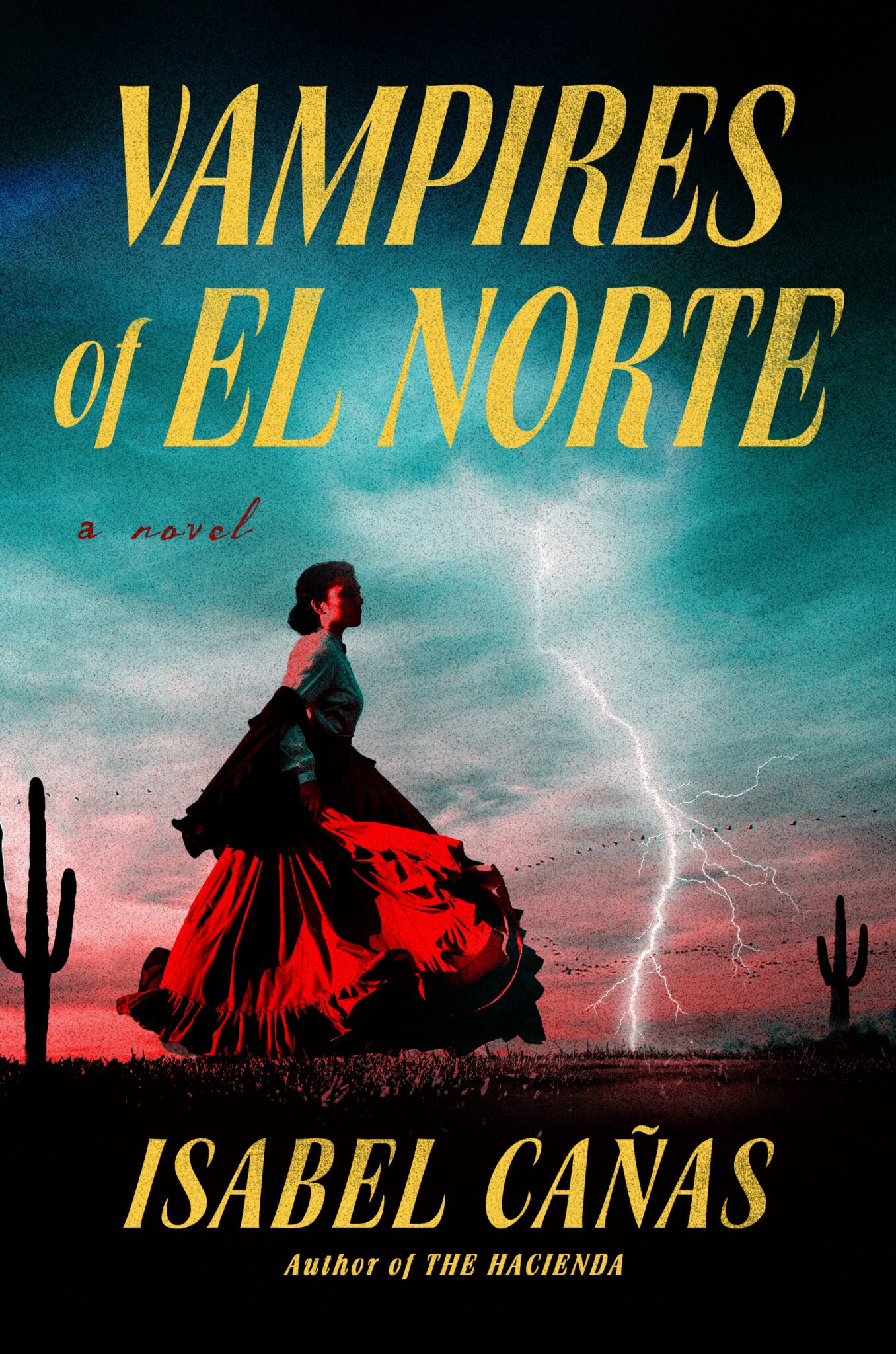
Two of the most spine-chilling Borderlands Gothic writers of late are Silvia Moreno-Garcia and Isabel Cañas. Moreno-Garcia’s Mexican Gothic exploded in recent years and is being developed into a graphic novel. Cañas’ Vampires of El Norte was a Locus and Endeavour Award Finalist in 2024.
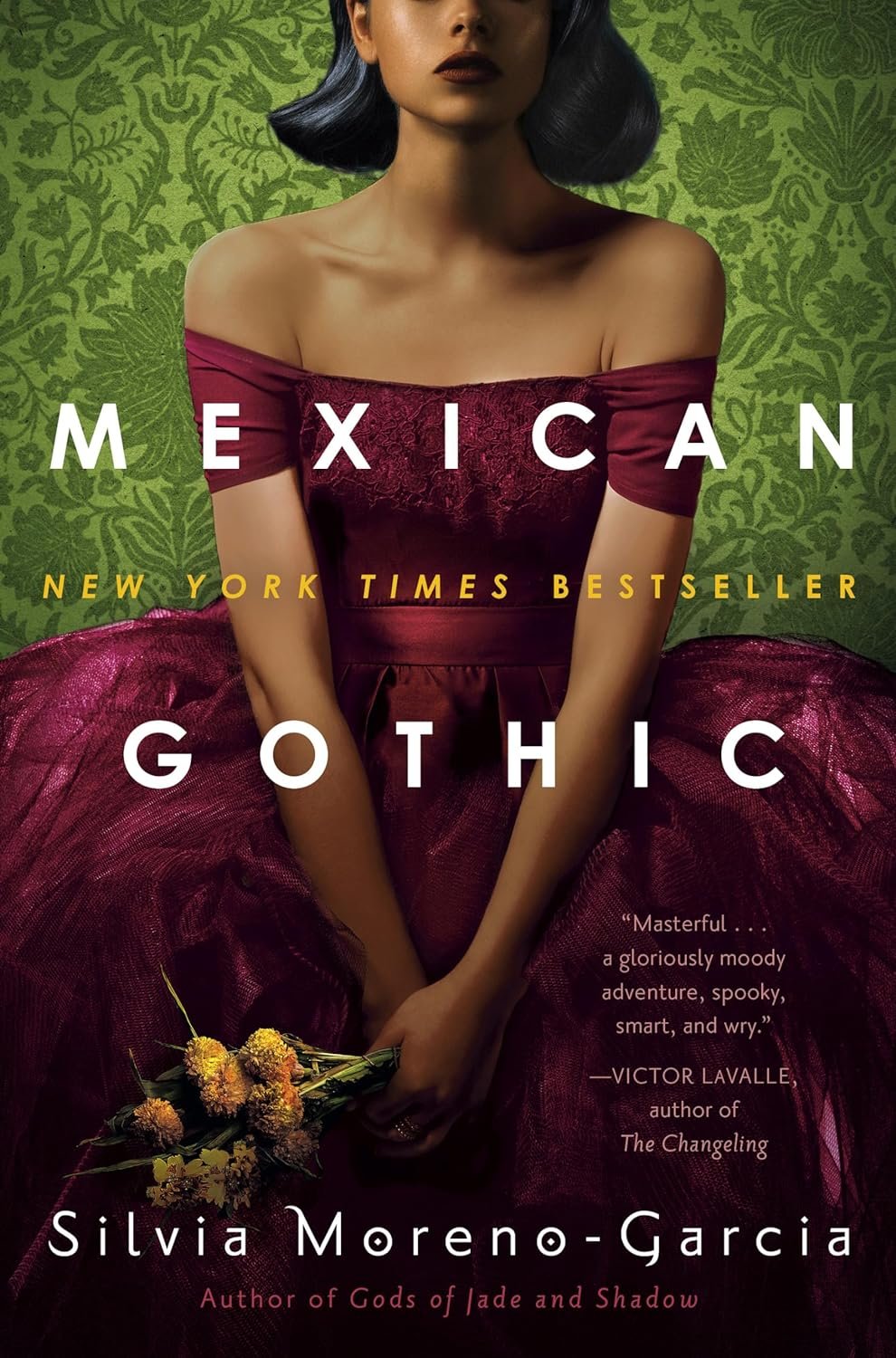
In Mexican Gothic, colonization and eugenics attack in the dark of dreams, interwoven with an all-consuming fungus weakening our heroine, Noemi, to the predation of the wealthy Anglo family. Moreno-Garcia’s 1950s gothic fungal tale is a near literal example of the monster that colonization is and creates. It was not one rotten seed, but an elaborate, interconnected system that moved in spaces unseen with the express intent to cause harm. The poison of colonization traveled through our land like spores, floating on the wind with no way to stop it.
Vampires of El Norte takes us to the Texas-Mexico border in the 1840s, where Nena’s rancho and the surrounding communities are facing a vampiric affliction they call susto, a sudden terror that frightens the soul into pieces or from the physical body (Anzaldúa 31). At the same time, starvation and anglo-colonization are threatening the rancho crops, land, and livelihood. With magic and colonial monsters stealing spirits, Nena takes us on a Borderlands Gothic adventure that deserves a cinematic companion.
Now, two authors might not be a strong argument for the invention of a new genre. Let’s follow the ghosts back to the 90s and examine a global phenomenon.
Diana Gabaldon is one of the most successful authors in the world. Her hit series, Outlander, was published in 1991 and became a well-known TV show that spanned eight seasons, with the final streaming in Spring of 2026. Gabaldon was raised in Flagstaff, Arizona (a triple Borderland) to a Mexican American dad from rural New Mexico and an American mother who had one English grandparent that immigrated in the late 1800s (dianagabaldon.com).
Her work in Outlander is centered around the English colonization of Scotland and the Eastern United States rather than Mexico or the physical borderlands she belongs to. Despite this, her work exhibits key traits of Borderlands Gothic. Gabaldon describes herself as “American.” and elaborates on her American mother's English grandparent, who became a wealthy pillar of the Arizona community. She goes on to say that her father’s family has been in New Mexico since the 1500s and that they were “respectably acquired by the U.S. with the Gadsden Purchase in 1853” (dianagabaldon.com). The Gadsden Purchase included the forced removal of Indigenous people and was a component of the U.S.’s westward colonization under the guise of Manifest Destiny. The purchase led to the split of more than two nations’ lands. Gadsden was generally supported in the South for the potential of new slave holding states as tensions with the North grew. A respectful acquisition is not a sentiment shared by all Xicanos. While Gabaldon describes herself in one way, her writing reveals her worldview that ties her to the Borderlands in a way only other Borderlanders can feel. Gabaldon's writing reveals herself as an outlander on the edges of Borderlands.

Disclaimer: The Outlander novels and television show include graphic depictions of sexual violence and abuse, though none of those topics are discussed in this article. Please exercise caution and care if pursuing this content further, and utilize resources such as StoryGraph content warnings for more information about the novels.
Gabaldon has a completely different perspective on U.S. Colonization than Moreno-Garcia and Cañas. However, she intrinsically cannot untie herself from a Borderlands worldview even with her focus on the colonizers themselves. While Outlander’s main character Claire is not Indigenous or Mexican-American, one can ally her mindset with the Borderlands. In the modern timeline, Calire’s husband Frank forces her to move to Boston as a way to further tear her from memories of her time in 18th-century Scotland. Later, after Claire travels back through time once again, she’s forced to leave Europe for the U.S. another time because of her husband’s alleged crimes and inability to live peacefully in Europe. Claire is a woman of which the border is cut across her body time and time again.
Outlander follows Claire, as an English WWII nurse, through a set of magical stones to 1730s Scotland. She has a romance with a highlander who is fighting English colonization, and eventually they move to the United States where they become colonizers themselves. In the U.S., Claire befriends a Tuscarora healer, Nayawenne, who shows her the healing use of some local plants and predicts Claire’s magical ascension. A year later, Claire’s involvement with the woman gets Nayawenne murdered and scalped by another colonist on the argument he was protecting Claire. Through the nine published novels, Claire is suggested to use magical healing powers to save and resurrect others around her.
A Trip to La Frontera
All three of the aforementioned novels feature Indigenous Elders who help the heroines, and their communities, heal or use the land around them. These women not only provide guidance, tips, or comfort, they also represent what the main character has the capacity to become. In Vampires of El Norte, Nena is a skilled healer adopting further techniques from her lover’s Indian grandmother. In Mexican Gothic, we see a self-sufficient Noemi visit the local Indigenous healer who lives alone and supports herself by supplying the village with remedies. Outlander shows us more than one Indigenous healer, with Nayawenne as a single grandmother with incredible healing and psychic abilities. These main characters aspire to be akin to, or as capable as, these Indigenous women, a leftover reverence for our grandmothers and other knowledgeable healers before so many were lost to assimilation.
Our three main characters face another Borderlands Gothic struggle: the stripping of “their land while their feet were still rooted in it” (Anzaldua 12). For Nena in Vampires of El Norte, she is facing marriage and financial hardship, putting her position and life in her rancho at risk. Noemi, in Mexican Gothic, is faced with potential marriage and the madness that took over her cousin and is consuming her as well. In Outlander, Claire is ripped from her English home by an accidental time travel, a literal crossing of timelines. Later, Claire is stripped of her chosen home again when her husband passes their land on to his nephew and effectively forces them to seek a new place to live outside of Europe.
Borderlands Gothic also explores what Anzaldua calls Coyolxauhqui Consciousness: “the process of emotional psychical dismemberment…and the creative work of putting all the pieces together in a new form, a partially unconscious work done in the night by the light of the moon” (Anzaldua and Keating 124). We see this in Nena as she learns to address susto, the vampiric affliction she survived but that plagues her rancho, and in Naomi as she fearlessly traverses the manor at night searching for answers to save her fragmenting cousin. Claire, in Outlander, is fragmented and rebuilt literally; with a husband and child separated by time.
Finally, the Borderlands Gothic explores nepantla and the way Mexican people live in a reality that accepts imagination and exists separately from the dominant Western reality and anglo experience. This space is where life and spirit meet and communicate (Anzaldua and Keating 28). Existing in this reality and allowing imagination to live beside us welcomes conocimiento: the knowing or understanding of what cannot be explained or seen. Cañas explores this in Vampires of El Norte by setting it against the Mexican-American war and having her main character explore the idea of anglo Tejanos as soul-sucking susto-inducing vampires. On page one, Cañas tells us that Nena has conocimiento;
“...there was something she sensed whenever she set her palms to the soil of the herb garden behind la casa mayor or turned her face to the twilight bruised sky. A strangeness. A ripple of unease. An understanding, though timid at first, that perhaps there was some truth to the stories of blood-hungry beasts and river ghosts that the abuelas on the rancho spun to keep children close to home after sunset. A sense that there was a reason to watch one’s back when shadows grew long.” (1)
In Mexican Gothic, Noemi has conocimiento dreams that help her fight the fungal poisons of High Place and keep her safe from the eugenics-focused breeding of Howard Doyle.
“She dreamed that the door opened and in walked Howard Doyle, slowly, each of his steps like the weight of iron, making the boards creak and the walls rumble…she could not move.
She saw herself too, asleep.
Behind her, she felt a presence, felt it like one feels a cold spot in a house, and the presence had a voice; it leaned close to her ear and it whispered.
“Open your eyes,” the voice said, a woman’s voice.” (80)
Outlander explores conocimiento and nepantla by Claire’s use of her knowledge from the future in attempts to protect people or change outcomes, and her magic to heal people or reanimate the dead. In Gabaldon’s most recent Outlander novel, Claire saves an infant by calling upon a blue spark she sees, outside the reality everyone else exists within, willing the baby’s heart to beat from stillness.
“A blue spark. I saw it, saw it and looked deep into it, willing it to stay, holding it safe in the palms of my hands. Thup…My finger stilled, and the small sound answered. Tup.” (392)
Light into the Shadows
The Borderlands Gothic is an exciting genre for Xicanos and the greater Mexican and Latin American diaspora. It allows for an exploration of our history through our own words and truth. Carving our own genre out of the literary space is a way to take back our own power. Borderlands Gothic novels used to be few and far between, but thanks to Silvia, Isabel, and Diana, even more writers are publishing their Borderlands Gothics today.
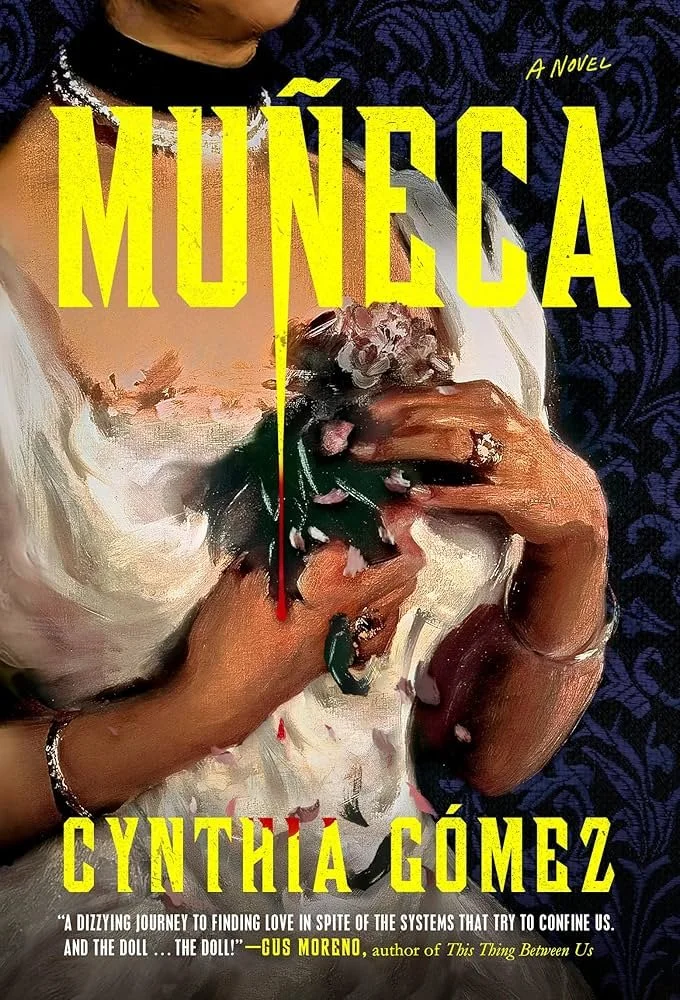
Cynthia Gómez takes us to 1968 Oakland, California, in Muñeca. Natalia (Nati) Fuentes, working-class witch, hears about a mysteriously ill Spanish heiress and hopes to secure a healthy reward by curing her of the dark magic Nati believes afflicts the heiress. Romance, ghosts, class, and colonization come together in a perfect encapsulation of a Queer Borderlands Gothic.
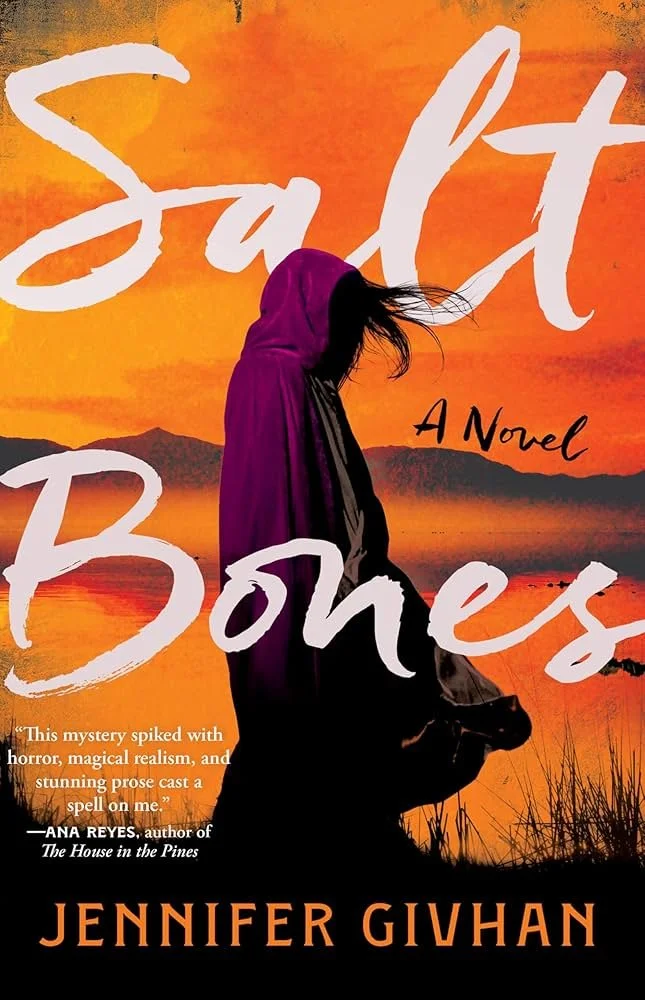
Jennifer Givhan twists a tale of missing girls in 1970s El Valle, a MexiCali border town strangled by dust and ghosts in Salt Bones. Inspired by the real-world Salton Sea community, nightmares, memory, and horror overlap with a distinctly Xicana borderlands ecojustice lens.
Rudy Ruiz exemplifies Borderlands Gothic in Valley of Shadows through Solitario, a man who lost everything when the 1870s Rio Grande moved and cut his Mexican town off into Texas. With the help of an Indigenous seer, Solitario confronts the very ghosts still haunting us today.
To be Mexican is to stare colonialism in the face with every living breath. It is an inescapable darkness that's continually haunted the diaspora for 530 years, and something that we refuse to ignore. Writing about our history and imagining the ways our ancestors survived takes power back into our own hands. There is light in the dark when we explore nepantla, conocimiento, history, and the Borderlands Gothic.
List of books mentioned:
Mexican Gothic
Vampires of El Norte
Outlander
Muneca
Salt Bones
Valley of Shadows
Follow the author at @dh.trujillo and www.danihtrujillo.com