

By Alyssa Aspiotis
Edited By Emily Quintanilla
It’s no surprise that when the annual Goodreads Choice Awards nominees come out, there is always immediate outrage about the list. Each year, readers express frustrations about a consistent lack of diversity in the books nominated. In response, the online community takes it upon themselves to encourage readers to read beyond their own life experiences and more widely than what has been nominated. With the same frustrations each year and with no change on the horizon, the big question is, why do book awards have a whitewashing problem in the first place? And is there any changing this in the future?
The Beginning: The Pulitzer Prize
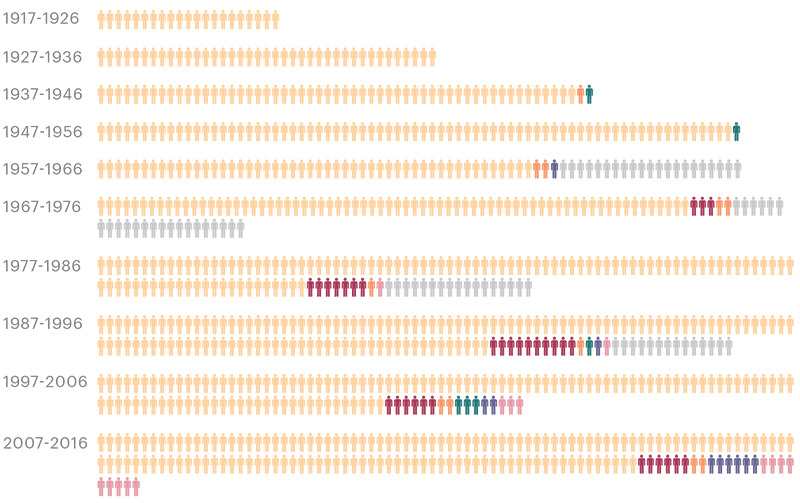
One of the first notable awards was the Pulitzer Prize, which was established in 1917 by Joseph Pulitzer, and remains an extremely coveted award to this day. This prestigious award is presented to various writers in journalism, books, music, and drama, and is awarded by a committee called “The Pulitzer Prize Board.” The board consists of around 19 members who are literary masters in their respective fields.
In 2016, the Columbia Journalism Review broke down the demographics of all Pulitzer Prize Winners from the last 100 years. It was noted that 84% of the winners were Caucasian and 84% were men.
While there is a clear lack of diversity in the individual winners, the content that is recognized also lacks diversity. The study further noted that only 10% of Pulitzer Prize-winning journalism covered the Middle East, and only 6% featured stories relating to South and Central America. Furthermore, only 14 prizes were awarded for content about Africa, showcasing a large gap in the type of work that is being recognized.
In more recent years, there has been an influx of diverse writers awarded this prize. In 2025, the winner of the Fiction category was the novel James by Percival Everett, a moving reimagining of Adventures of Huckleberry Finn told from Jim’s perspective. In addition, the winner of the Autobiography category was Feeding Ghosts by Tessa Hulls, a graphic memoir about three generations of Chinese women. The Pulitzer Prize has come a long way, and last year’s winners signal a step in the right direction of celebrating everyone.
The Evolution: The Goodreads Choice Awards
The Goodreads Choice Awards are unique reader-driven literature awards that focus on a variety of categories, including genre-specific awards. Nominees are decided by the most popular and most read books by readers on the platform Goodreads. Goodreads is the most used and viewed platform for tracking and reviewing the books you’ve read, by allowing for star ratings and written reviews. This platform is directly linked to Amazon, which bought Goodreads in 2013 when the platform only had roughly 16 million users. In 2024, Goodreads users jumped to over 150 million, 77% being Caucasian, 9% Hispanic, 7% African American, 6% Asian, and 1% other.
Knowing the demographics of Goodreads users, it is no surprise that the Goodreads Choice Awards nominees skew white, but it is extremely concerning as the awards fail to recognize individuals' work for increasing visibility of diverse stories and authors.
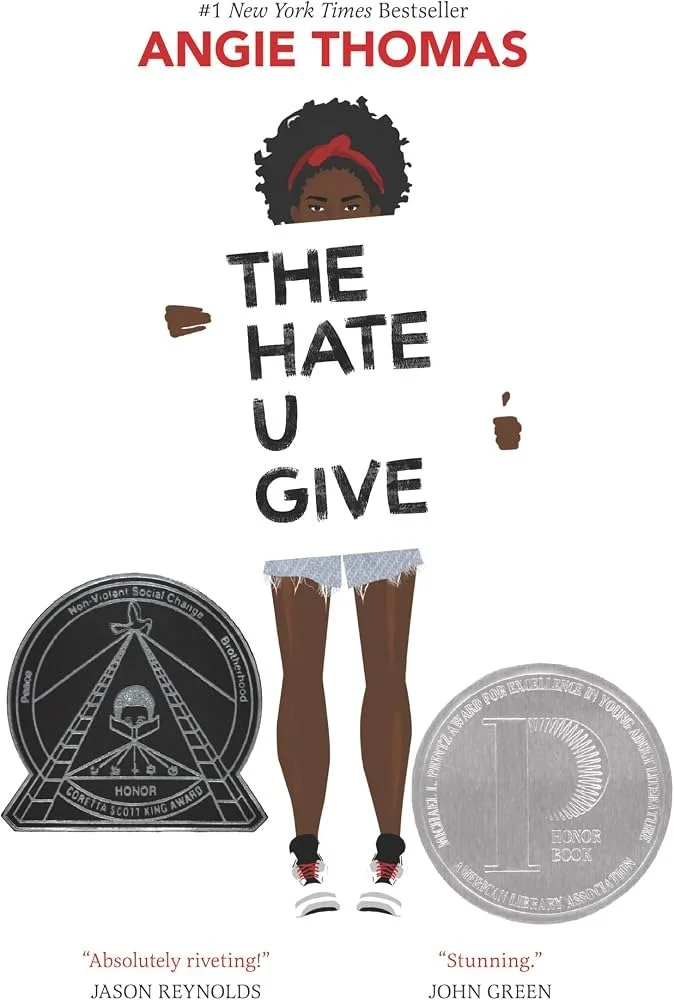
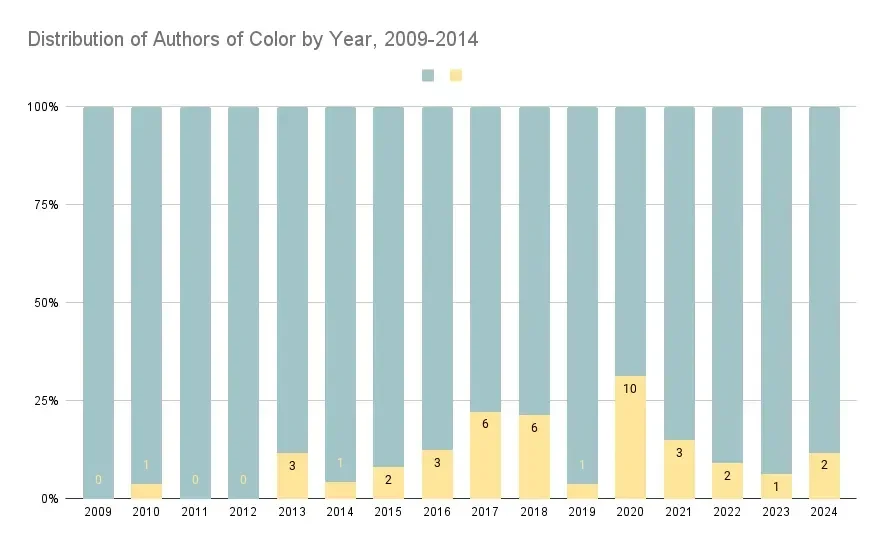
According to the Book Riot’s article titled “The Unbearable Whiteness of the Goodreads Choice Awards,” there have been a fluctuating number of BIPOC authors included in these awards. There were notable increases in representation in 2017, 2018, and 2020. These increases seem to directly coincide with political movements around racial identities in the United States. For example, 2017 was the year The Hate U Give by Angie Thomas was published, an award-winning young adult book about systemic racism, identity, and police brutality in Black communities. The novel was adapted into a film in 2018, prompting even more readers to read stories about marginalized individuals. 2020 showed the largest spike as this was when the murder of George Floyd spurred the Black Lives Matter movement. There were a plethora of lists and books being pushed about antiracism and a surge in people reading diverse stories, but it did not stick as there was a huge decline in 2021.
The data showcases that white readers are inconsistent with their reading and reviewing of diverse literature. When the protests died down, the numbers yet again declined and defaulted to the same white authors we see every year in the awards.
The big question is, where do we go from here?
Now: Awards Celebrating Diversity
The more we talk about the lack of diversity in major book awards, the more we start to wonder: which awards do care about celebrating and acknowledging diverse stories? Here are some that are actively fighting against the whitewashing in book awards.
The International Booker Prize
The International Booker Prize is an honorary literary award to celebrate translated fiction. These awards celebrate the important and underappreciated work of translators, where a great majority of books focus on diverse voices and stories that are often overlooked in other awards. For the first time in 2025, a book translated from Kannada, a language that is often spoken in southern India, was nominated for the International Booker Prize. Furthermore, the 2026 winner of the International Broozer Prize was Taiwan Travelogue, a novel translated from Taiwanese Mandarin that celebrates Japanese culture and incorporates queer love as well.
The Hugo Awards
One of my personal favorite awards I look forward to every year is the Hugo Awards. These awards highlight science fiction and fantasy writing in various forms, and celebrates the diversity of the genre. The finalists and awards have become more diverse over the past decade and continue to be one of the more inclusive awards. From 2016 to 2019, N.K. Jemisin made history by receiving the Best Novel award three years in a row for her bestselling series The Fifth Season. This is a series that focuses on intersectionality and systemic oppression, and was celebrated for being a spectacular book series that many readers (including myself) adore.
The Diverse Book Awards
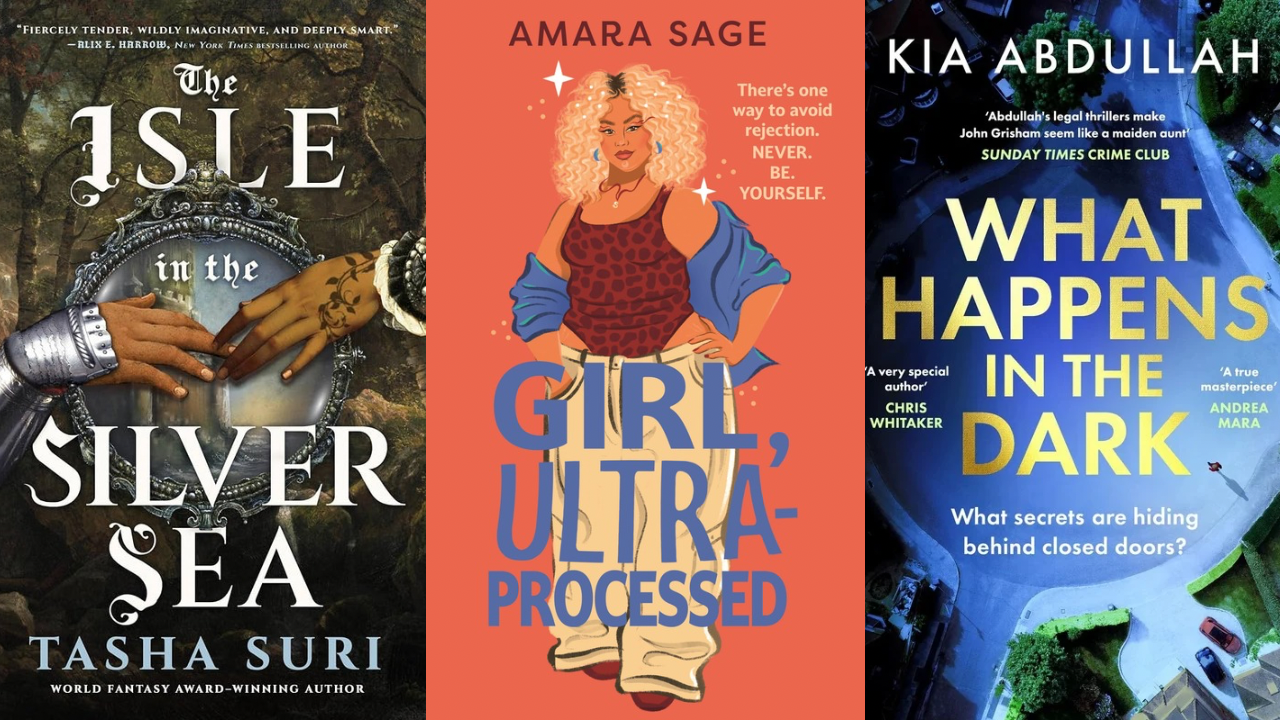
In 2019, award-winning children’s book author Abiola Belle and publicist Helen Lewis created the Diverse Book Awards. These awards are open to any picture book, children's book, young adult, and adult novel that features authors from the UK or Ireland and focuses on stories that are often overlooked. They categorize eligible nominees by having characters in these books that are not typically represented in publishing, as everyone deserves to see themselves represented in these books. The current 2026 shortlist features some incredible titles such as The Isle in the Silver Sea by Tasha Suri, Girl, Ultra-Processed by Amara Sage, and What Happens in the Dark by Kia Abdullah.
The Readin’ Awards!
Of course, my personal favourite (and yours too!): The Readin’ Awards! These awards celebrate both traditionally published and indie-published authors in a variety of categories. There are categories such as “Best Traditionally Published Fantasy,” “Best Side Character,” and “Best Indie Published Romance.” The nominees and winners are chosen by readers. Most (if not all) of the nominees feature diverse characters and stories that deserve to be celebrated.
Keep Reading Diverse Stories!
There is still a clear lack of diverse voices and stories being celebrated in these book awards, which means there is still work for everyone to do. Keep pushing diverse stories, characters, and perspectives, and maybe one day, there will be consistent growth in these authors being nominated, not just around political events. I urge you to take a look at the books you’ve read so far this year and ensure you are reading from all perspectives, not just by people who look like you!
Want to shop the books in this article? Check out our bookshop.org list (affiliate link)