

Poolside, Ranch, or College Town Summer?
Interview with EJ Blaise
By Reilly Nelson
Edited by Rylee Chacon
If your summer reading list lacks elite banter, a get him back! by Olivia Rodrigo mentality, and an “I mourn the twenty years I didn’t know you” type of love, Better Than Revenge by EJ Blaise is the book your TBR is yearning for.
In this interview, EJ and I chat about writing inspiration, the revolution of the “angry girl,” commissioning art, and, most importantly, all about her debut trad release coming August 25th.
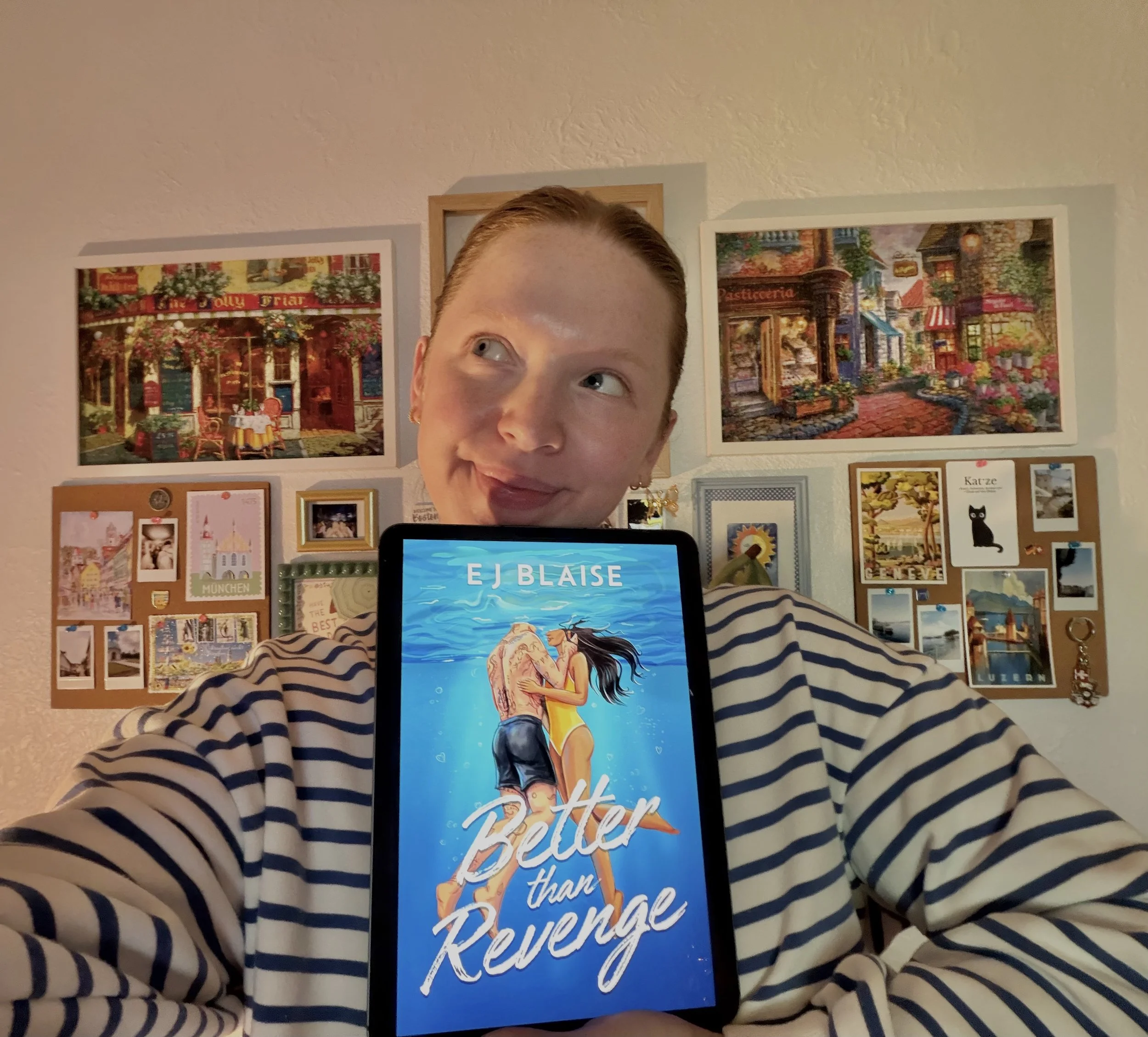
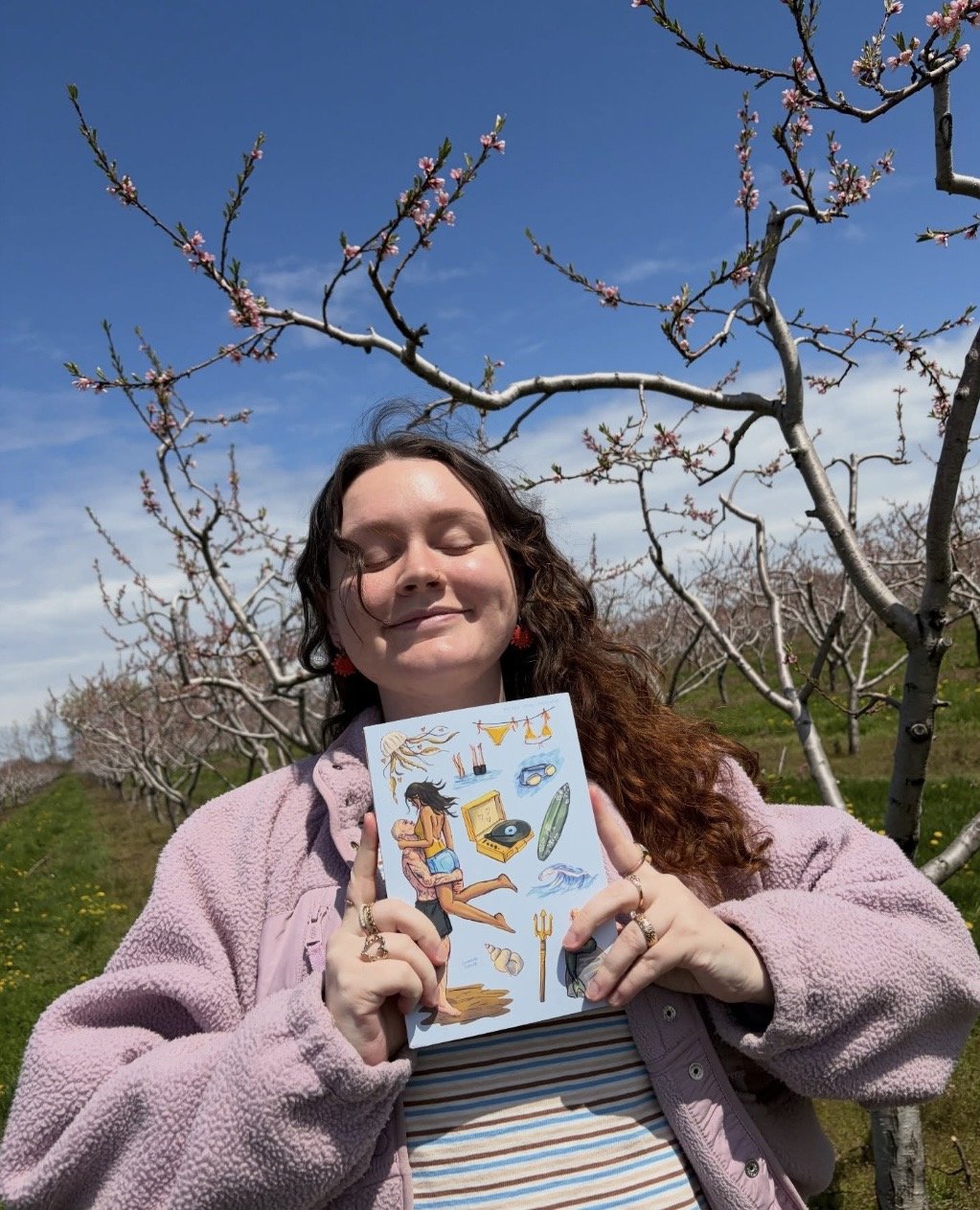
Book cover art by @summerrgrove
THE PEN IS HER SWORD: the writing process
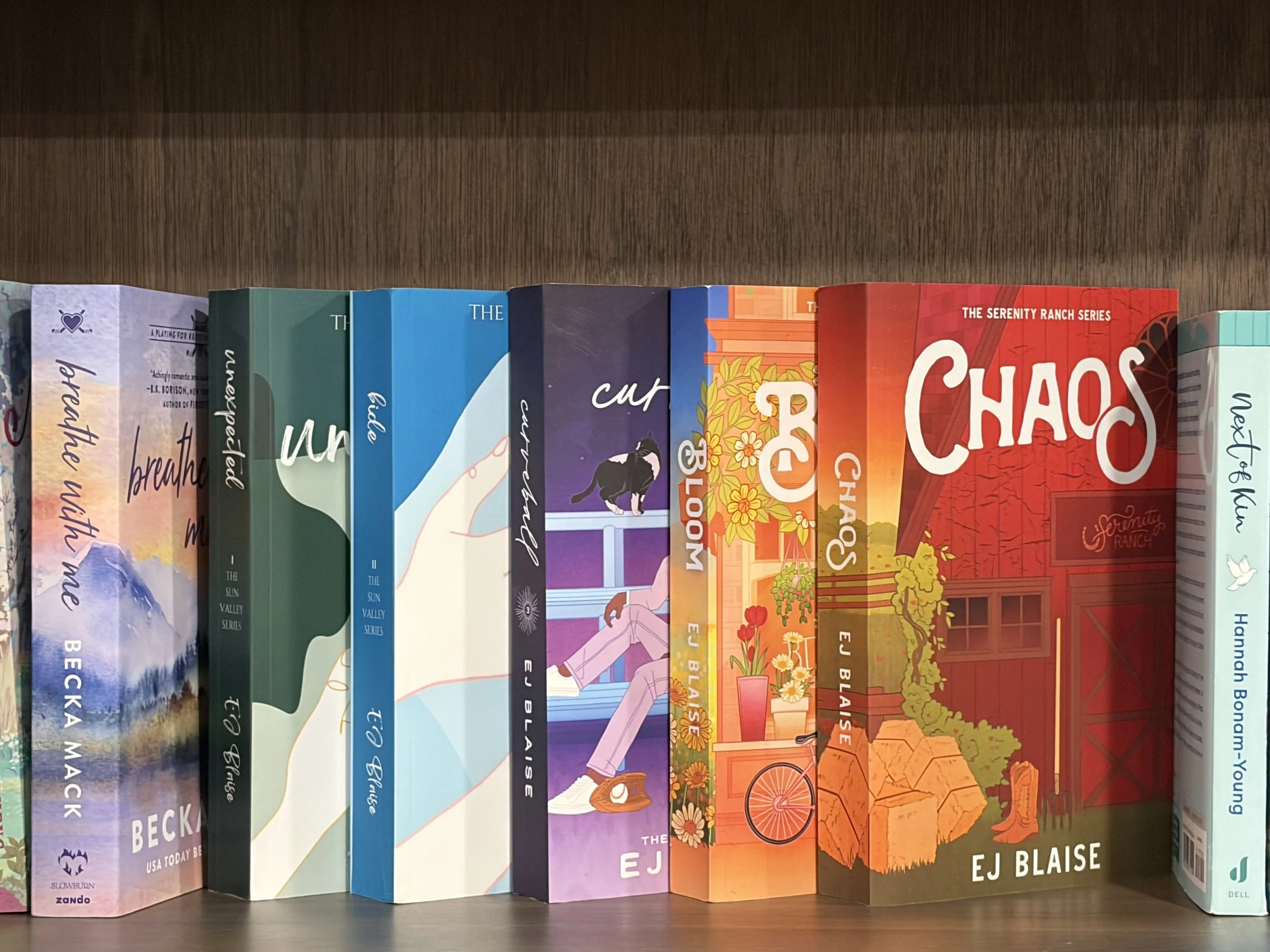
Sun Valley: Unexpected, Bide, Curveball
REILLY: When’s the first time you remember thinking, ‘yeah, I want to write romance’?
EJ: It was actually during the worst of the pandemic lockdowns. As a kid, I’d always dreamed about being an author, and I had a thousand random notes on an old iPod and scribbles in a journal of story ideas, but none of them were romance-centric. But then I found my way onto Wattpad and into a deep, dark romance pit, and I fell so in love and just thought ‘sure, we’ll give it a go.’ It was months later before I discovered indie publishing was even a thing (shoutout Elena Armas and The Spanish Love Deception) and realized ‘oh, I could actually do this.’
REILLY: When you started writing, did you have any goals for what you wanted your readers to take away from your books? How did these goals change as you continued writing?
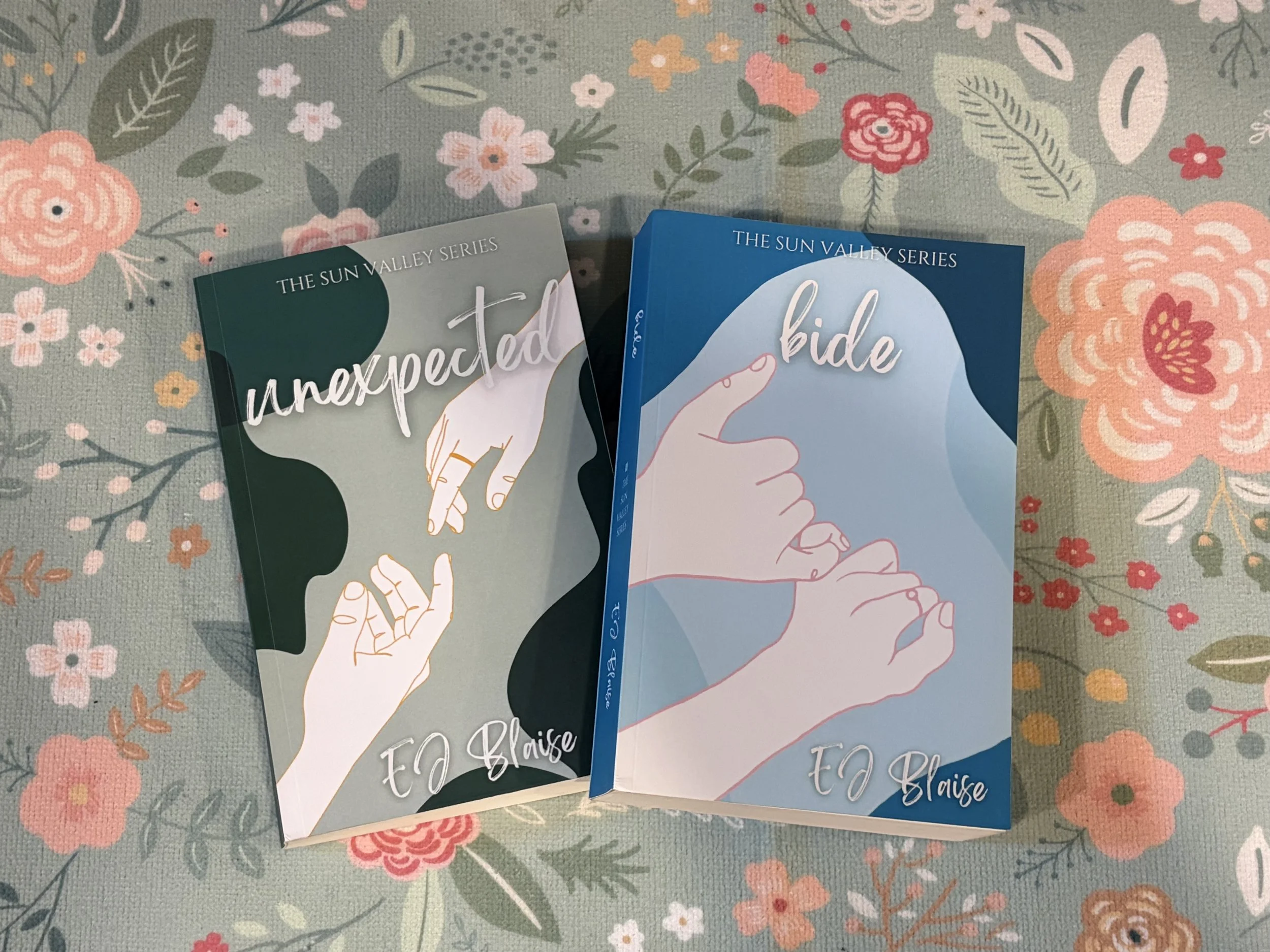
EJ: When I first started writing, I couldn’t have even fathomed actually having readers. Like I said, I started writing during lockdown and I just wanted an outlet. As soon as people started reading though—and I discovered the wonders of a Wattpad comment section—I added a content note to Unexpected that’s now in all of my books. If these are sensitive topics for you, please take that into consideration. If they aren’t, please exercise compassion. I think that’s probably my goal; empathy.
REILLY: What do you do to inspire your writing? (ex: listening to certain music, your traveling, brainstorming with friends, etc.)
EJ: There’s always a Spotify playlist and a Pinterest board involved. I always do the most writing when I’m also on a killer reading streak. A lot of the time I’ll be watching something and a certain scene or a character relationship will strike me particularly hard— Serenity Ranch exists purely because of a Heartland hyperfixation, Better Than Revenge is such a love letter to 90s/00s romcoms, and Sunday and August from Curveball are my Lorelai and Rory Gilmore.
IT’S OKAY TO FEEL LIKE THAT: found family, “angry girls,” and introspection
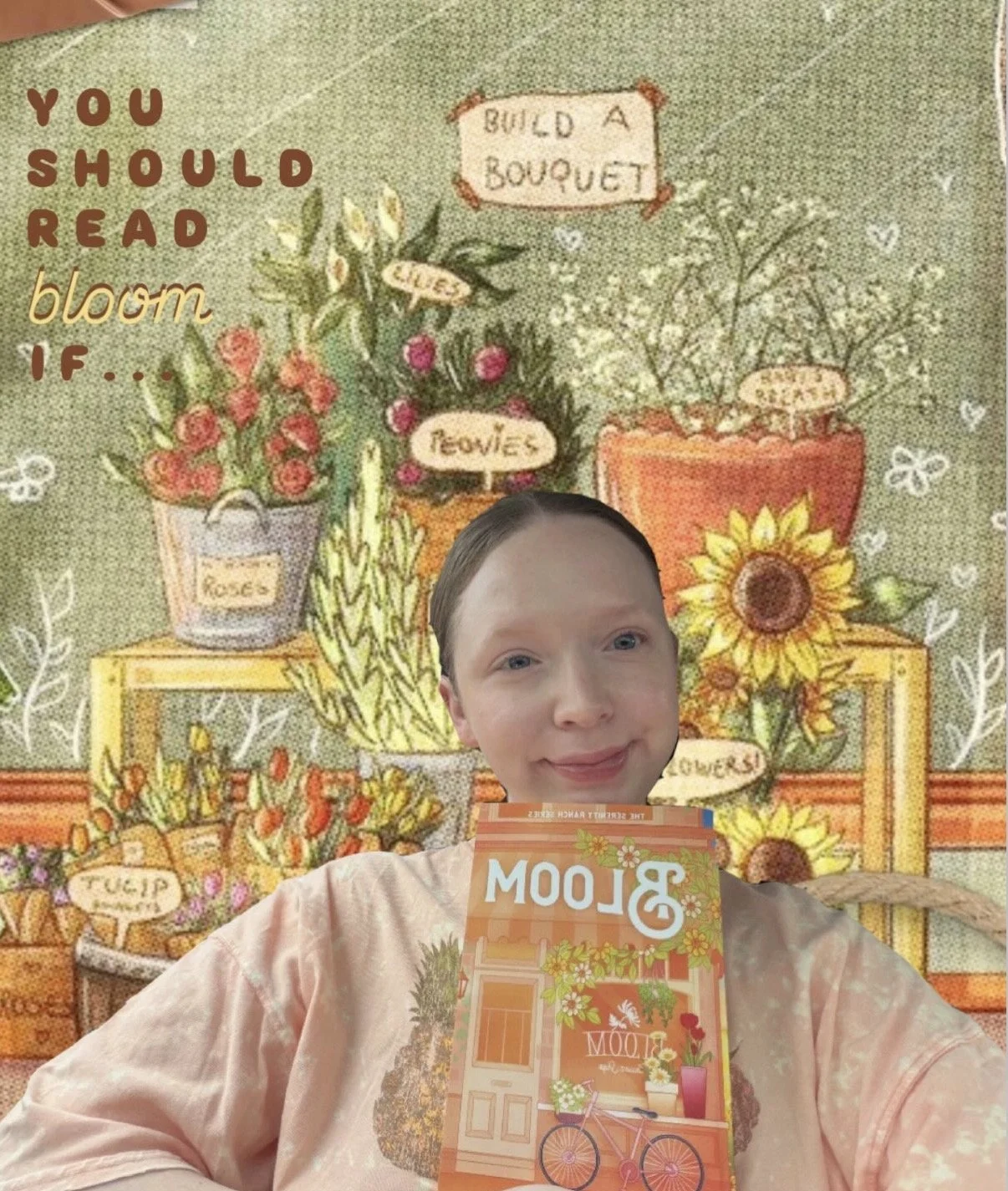
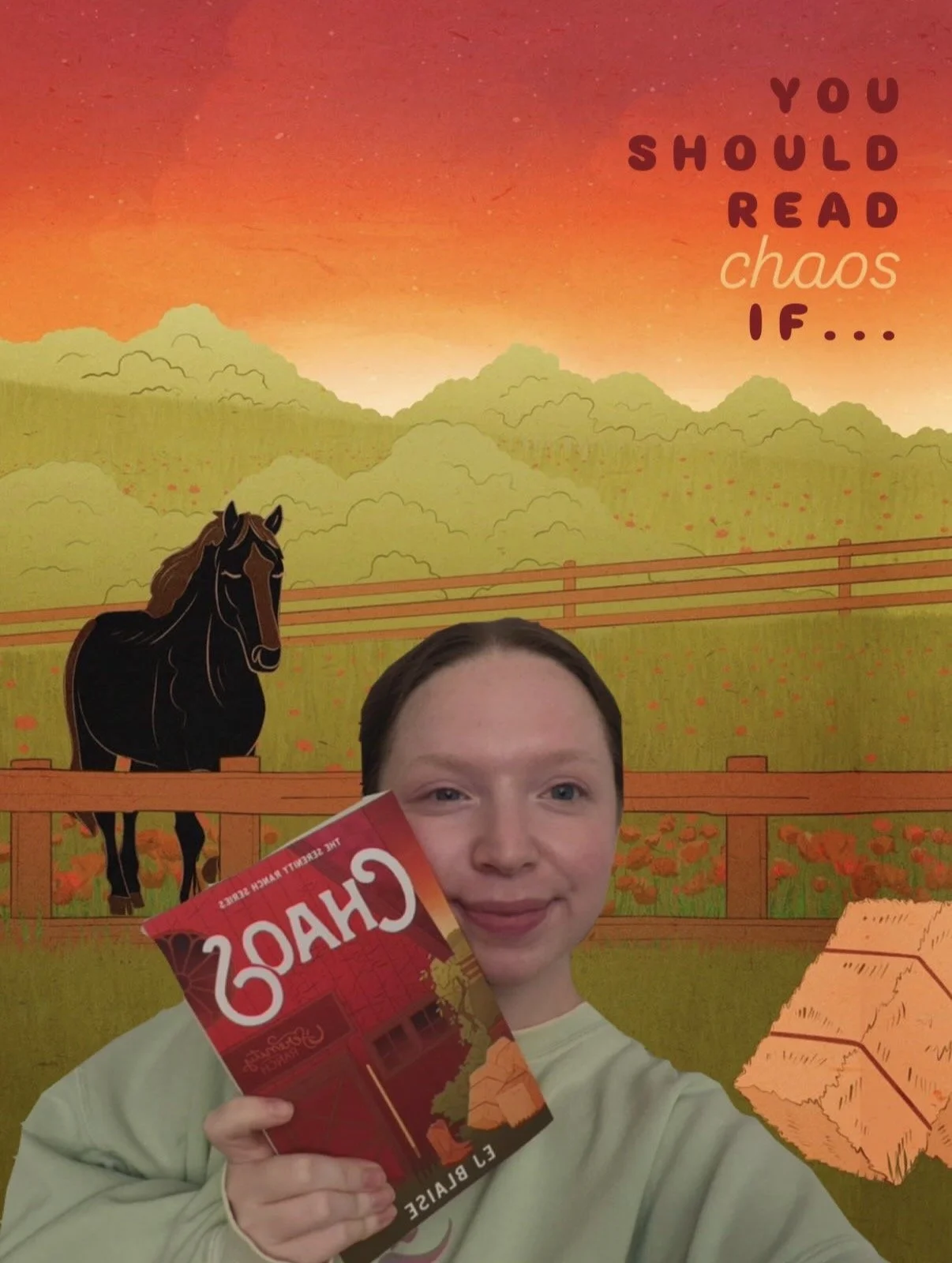
Serenity Ranch: Bloom, Chaos, & more to come. Lux, Grace, Eliza— who will be next?
REILLY: Your books handle some heavy themes and character arcs. How do you approach writing these?
EJ: With the utmost care, respect, and empathy. Not all of my characters’ experiences are my own, however the resounding emotions and reactions usually are, so I always treat them and their experiences how I wish I was treated whenever faced with something similar.
REILLY: Why do you think it’s important to not shy away from writing more intense themes? How do you balance writing banter and romance with heavy themes?
EJ: I think mostly it really is as simple as showing that people who experience horrible things or feel horrible emotions or are even horrible themselves sometimes can still get their happy ending. They still deserve it. They’re still capable of banter and romance—they’re not mutually exclusive.
REILLY: How do you think you’ve evolved as a writer since writing Unexpected?
EJ: Ironically, despite the fact that my word counts are just as lengthy, I do think I’m a little more concise in my writing. I’m better at self-editing. Less dramatic, probably. I think I’ve always been pretty good at writing what I want, rather than what I think other people want me to write, but I do think I’m less scared of doing that now. I don’t know. Sometimes I think I haven’t evolved at all. I wonder sometimes if I wrote Unexpected now would it be different, or would it be the exact same because that’s just how that book needed to be.
REILLY: Luna, Lottie, Lux, Dani—they’re all fierce and what some would call “angry girls.” Why do you think it’s important to write female-identifying characters with these personalities?
EJ: Because being angry isn’t inherently a bad thing. Being angry doesn’t make you a bad person. It’s a really complex emotion that I think is often confused with aggression, which it isn’t; it’s frustration and devastation and confusion and a hundred other things that people, especially women, aren’t typically ‘allowed’ or given any kind of grace to feel. These are characters that are angry and grumpy and sharp, and they’re also incredibly caring, sweet, empathetic girls. It doesn’t have to be either or. Male characters are afforded all the grace in the world and allowed to have layers and make mistakes and generally be assholes so they can have their ‘aw, adorable, he’s trying to change’ moments. Let women have the same. They’re also so young. I hate, and love to challenge, this weird notion that everyone is the perfect version of themselves in their early twenties. That’s important to me. I dedicated Chaos to those who struggle loud and confused and nasty because I was someone who struggled loud and confused and nasty—I still am. I just feel like, when I was a teenager, if someone had said hey, it’s okay to feel like that, or anyone had taken a moment to help me through those big emotions instead of demonizing them or berating me, or I’d read a character like that who wasn’t the antagonist in the story and found her happy ending because of the way she is, not despite it, I would’ve had a very different life. I would’ve had a very different opinion of myself.
REILLY: Why do you think the book community is so quick to challenge characters like Luna, Lottie, Lux, and Dani as being “unredeemable”?
EJ: They’re the kind of characters you hate to relate to. They’re loud and messy and raw. They don’t emote or act or react in an aesthetically pleasing way. They’re not easy. They make mistakes. They don’t change quickly or neatly. I think when people recognize themselves in overtly flawed characters, it’s very confronting and uncomfortable and maybe, unfortunately, a bit shameful, and the instinctive reaction is to reject it—ironically, this is probably exactly how Luna or Lottie or Lux or Dani would react to that kind of confrontation too. I also think we’re currently living through an empathy crisis, and some people just cannot muster up a shred of it for anyone they deem imperfect or undeserving. Also, misogyny. Unfortunately, it’s almost always misogyny.
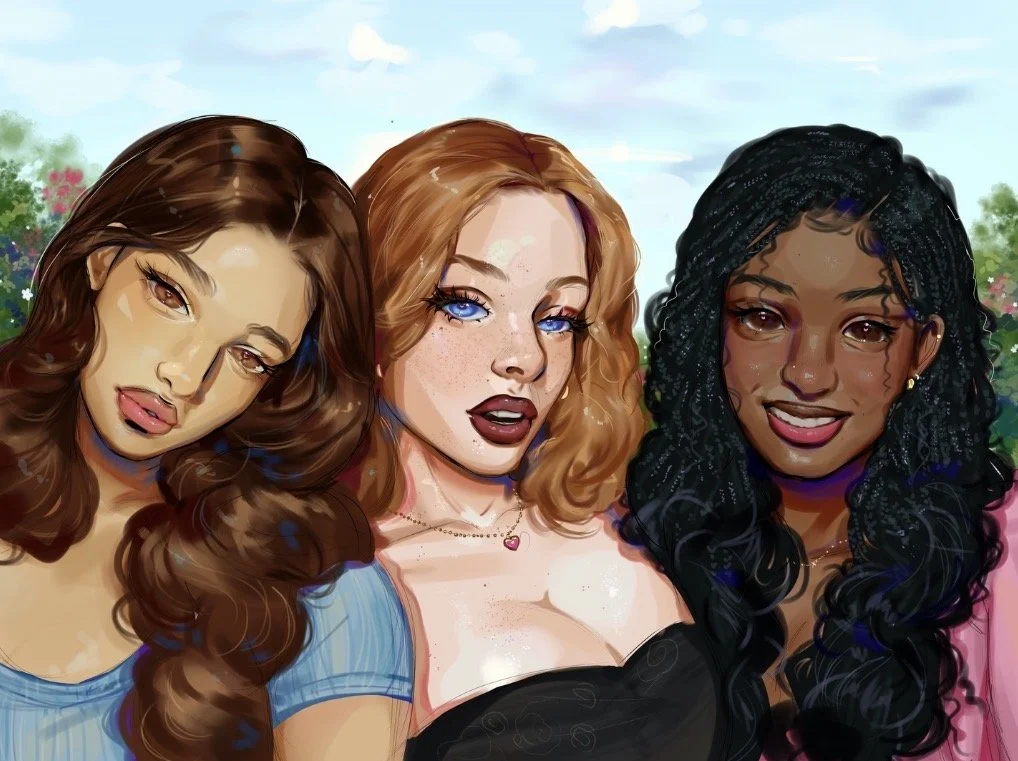
Art by @moo_barh_art
REILLY: Found family is the most prominent trope across all of your books, which can really make readers feel like a real part of your fictional found families. Why is found family an important theme for you to explore in your writing? How do you think the found family trope helps yourself and your readers connect to and appreciate their own found families?
EJ: I just think it’s the sweetest, most fulfilling trope. Platonic love is my favorite thing to write. I think, yes, you get drawn into a book by the romantic pairing, but it’s the friendships that really enrich a story and give it depth. Plus, writing gave me my own little found family so I personally find it important to pay it as much respect as I possibly can.
OUR CLOSE AND PERSONAL FRIENDS: commissioning art
REILLY: Why is commissioning so many different art pieces for your books important to you as a writer?
EJ: I fear there’s no profound reasoning behind it—I just love getting art. I love my characters coming to life. I love that giddy feeling of finding a new artist that you think will nail a specific brief. I love sharing a new piece and seeing everyone else love it. I love the comfort in recommissioning someone and building a relationship. I just love art. Give me all of the art. Support all of the artists.
REILLY: What’s your favorite part of connecting with a new artist to work with on a commission?
EJ: There’s nothing quite like the feeling of getting that first sketch and thinking oh my God, those are my close and personal fictional friends. They’ve nailed it.
REILLY: What do you think the different representations of your characters and settings do for the reader’s experience?
EJ: It creates such an immersive experience, I think.
REILLY: You’re a bit of a world traveler. Have your travels inspired you to want a range of book art in different styles?
EJ: Travelling is definitely how I fell in love with art in the first place. I’m so lucky that I’ve experienced so many different styles and techniques, and I love that I get to mirror that in my job by working with so many artists with so many different styles.
A glimpse into EJ’s commissioned art portfolio
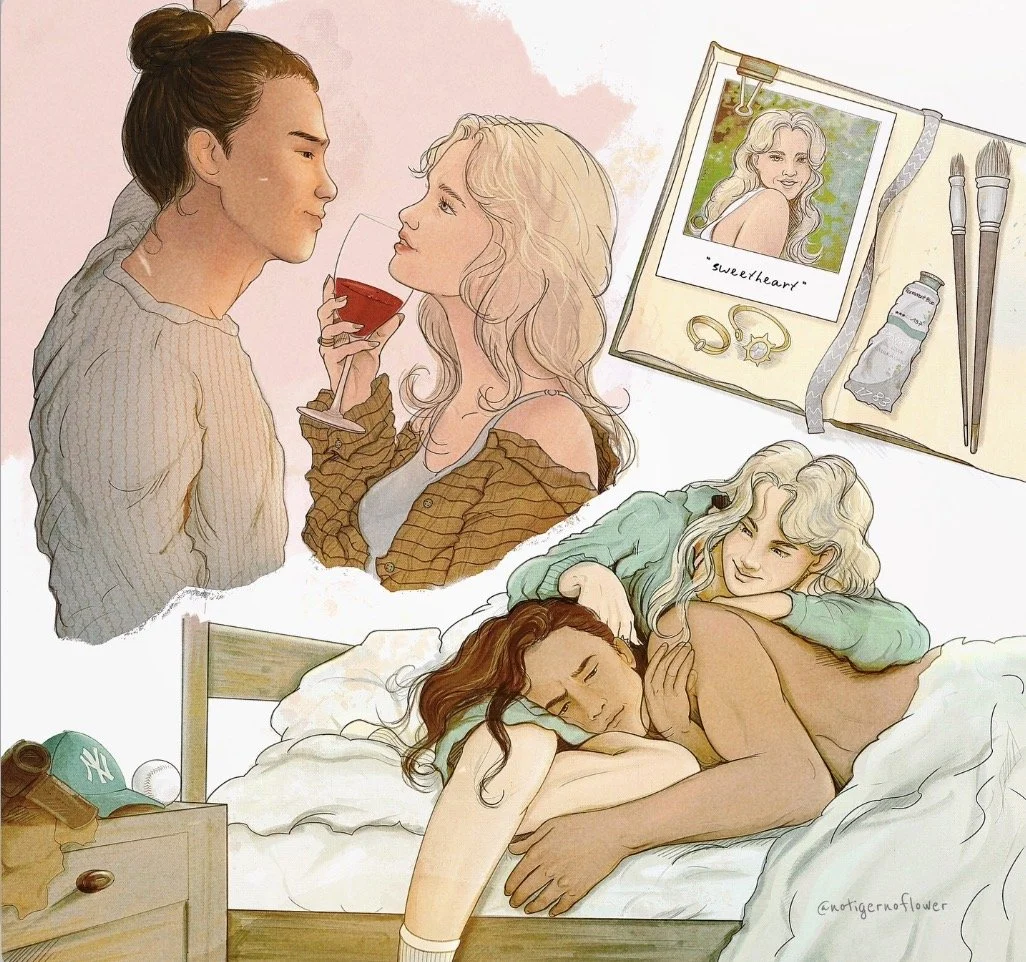
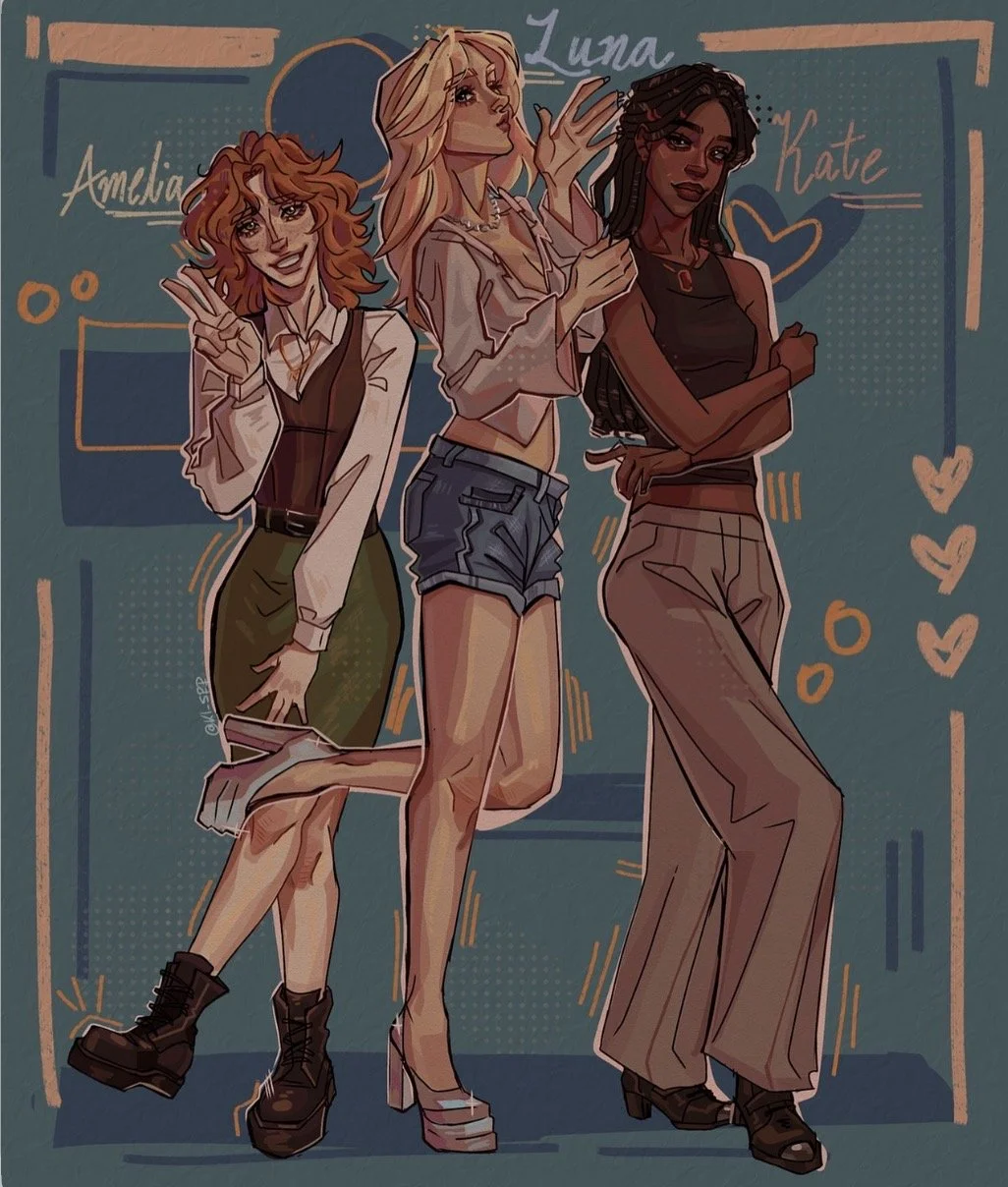
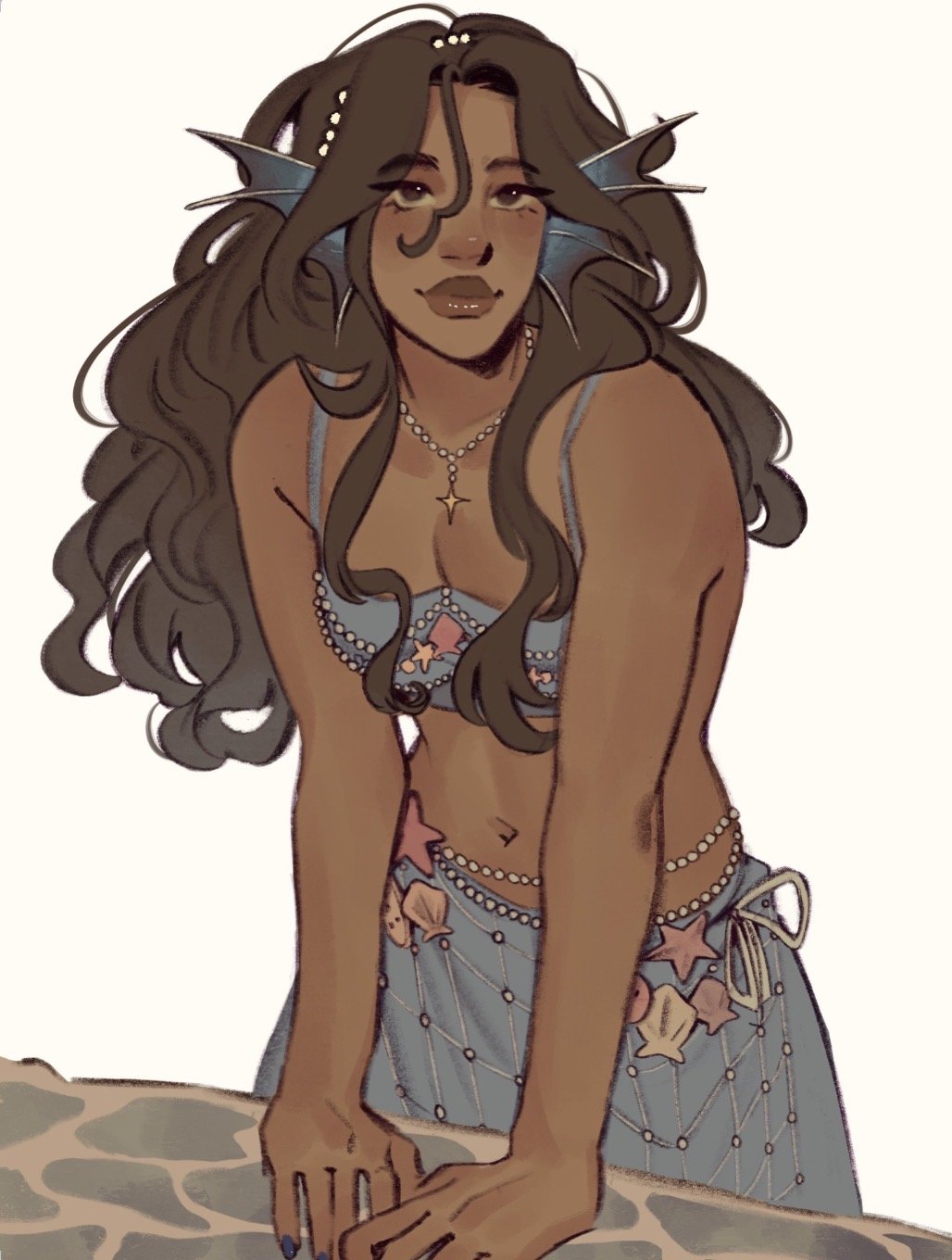
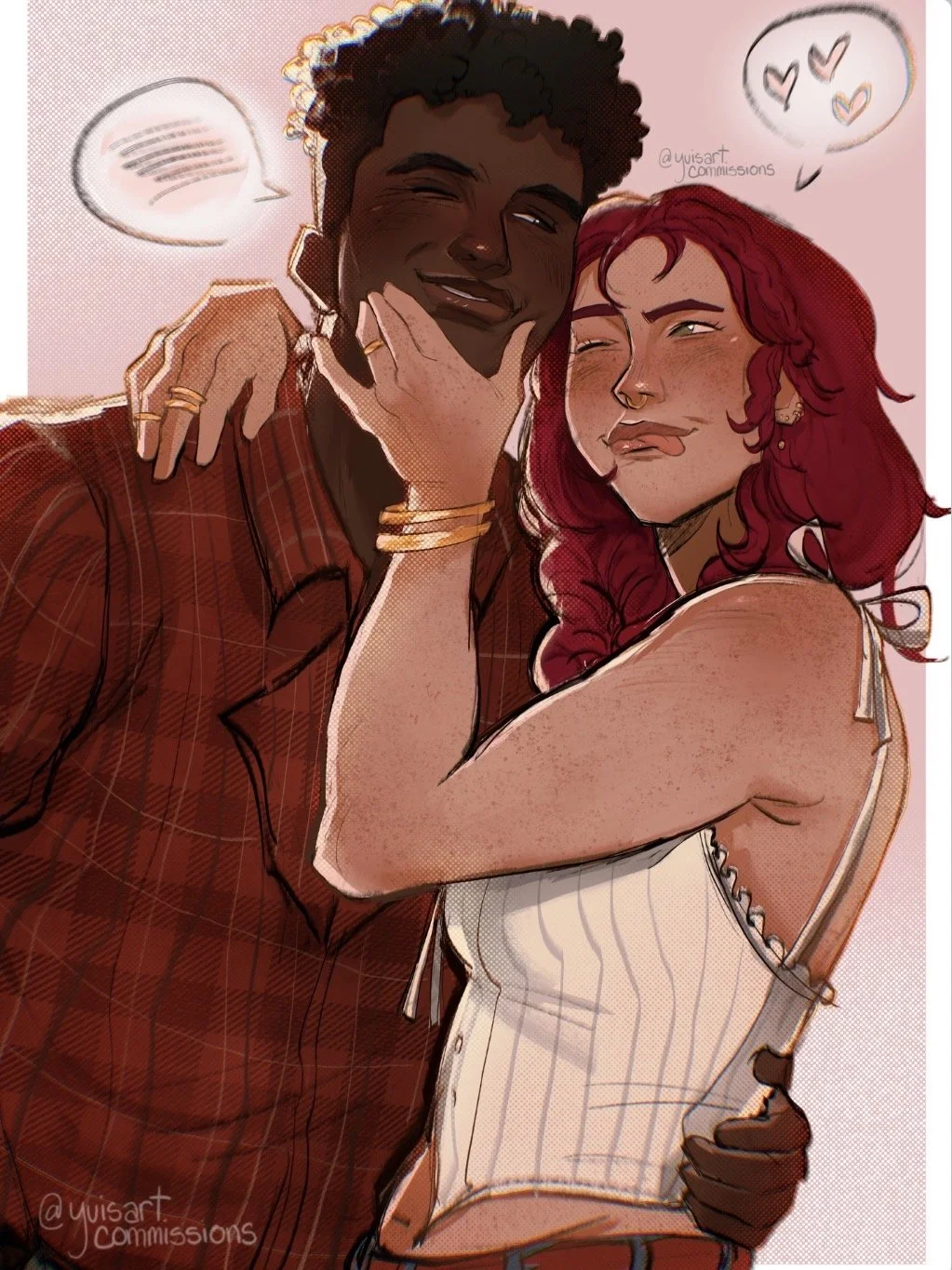
Art by @notigernoflower, @kl_spp, @solsticle and @yuisart
GET HIM BACK! the publishing industry & her debut trad release
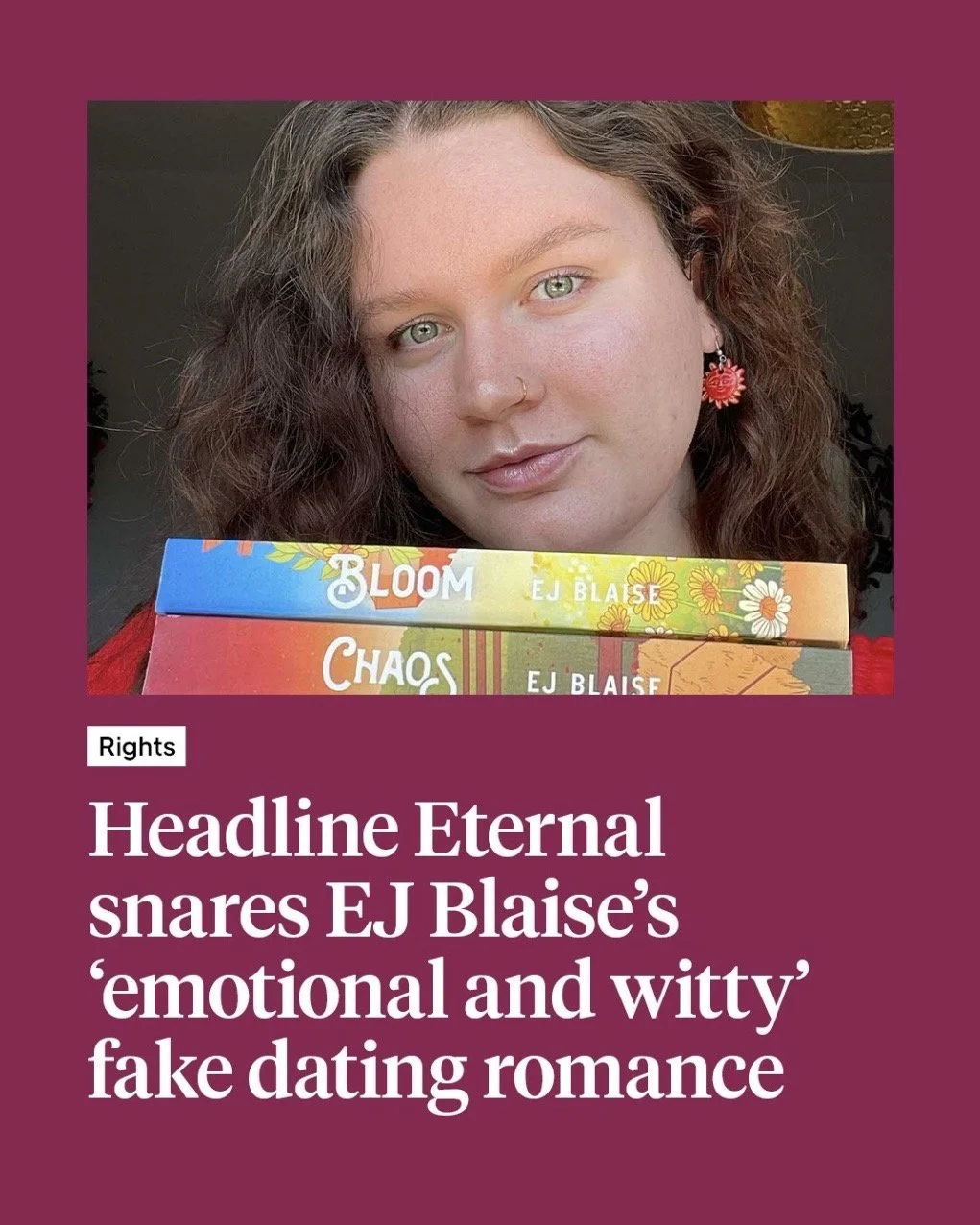
Headline Eternal x EJ Blaise book deal announcement with The Bookseller
REILLY: In one sentence, what is Better Than Revenge about? How would you explain Dani and Heath to a reader who’s contemplating reading BTR?
EJ: Get him back (derogatory). Avoidant girl meets obsessive boy; angsty, witty banter ensues. She should be at the club. If your boyfriend won’t, his athletic rival will. Blonds have more fun. Take your pick; you know I have never written one sentence about anything ever in my life.
REILLY: When did you find out about the Better Than Revenge book deal? What was your initial reaction?
EJ: I was approached in January 2025, I think, about the project, and oh my God, I was over the moon. It came at a really tough time—I’d just lost out on a different IP deal and Bloom was in the process of being thoroughly rejected by trad publishers—and it was just that little light at the end of the tunnel that I needed so badly.
REILLY: How was your experience working through the trad publishing process in relation to the indie publishing process?
EJ: Same same, but different. I’m a very solitary writer so it was a bit of adjustment to have other people involved in the process. Overall, though, it was a pretty smooth transition. I definitely think it helps that I plan to remain hybrid, so I still have my little comfort zone.
REILLY: The banter between Dani and Heath is some of the best banter I’ve ever read and really compliments their character development. How do you go about writing banter, whether that’s between romantic interests or friends and family? Do you think, to an extent, banter helps readers relate to the characters?
EJ: I’m trying to think of a way to answer this without sounding like an asshole, but I fear I’m just really funny. I’m so sorry. There’s no method to that madness. It just comes out. They actually don’t let you be Irish and unfunny—banter is our national love language.
REILLY: Referencing Heath’s tattoos, Readin’s Rylee wants to know: “As someone with a good amount of tattoos, at what point do you determine a character’s tattoos? Is it a part of initial character building, does something come up in the story that makes you think of a fitting tattoo, or do you fully flesh everything out and the tattoos come later?”
EJ: It’s kind of a combination of all of the above. I always have a Pinterest board going with ideas for the general aesthetic. Sometimes I’ll have a specific tattoo in my head right off the bat—long live Lottie Jackson’s tramp stamp—but with others, it’s not until I get to a point where I actually have to describe the tattoo that I really get into the details. I knew Heath’s were very ocean-forward. My cover artist, Summer Grove, actually came up with a lot of his. I sent her a list of the ones I knew he had—like the jellyfish on his chest and the Icarus on his side—along with the Pinterest board and basically said ‘have at it!’ She killed it, obviously. I do that with every artist, and I love seeing what they come up with.
REILLY: If you could write a book for one of BTR’s secondary characters, who would you choose?
EJ: I am an interconnected standalone girlie to my core, therefore I literally never write a character without thinking of what kind of book I could write for them or what kind of person they would end up with. If I had to choose, it would be Saylor and Kai—Kai became such a beloved character to me throughout writing BTR and I would love to explore his and Dani’s friendship more, and I yearn so badly to write another single mom romance. Also, honorary mention to Brendan and Imani. And an honorary honorary mention to Sebastian. If it was up to me, everyone would get a book.
REILLY: Our friend Mads wants to know: What are you looking forward to readers experiencing in BTR?
EJ: Daniela. My angel. She is so, so special to me, and I hope anyone who resonates with her comes to treasure her as much as I do.
Dani + Heath = #death
I didn’t ask EJ if Dani and Heath’s name choice was intentional for this ship name, but regardless, when you read Better Than Revenge, you’ll understand how ironically fitting the ship name is for the avoidant and obsessed main characters (in a very non-morbid way).
Follow along EJ’s writing and traveling adventures @ejblaiseauthor! Below is a list of UK, Australia— both with gorgeous preorder incentives—and US preorder links.
Trilogy of Romance (AUS)
Literary Lane (UK)
Book Lovers Bookshop (UK)
Waterstones (UK)
Bookshop.org (UK & US)
Since our interview, EJ has announced Forever (US) and Heyne (Germany) publication deals for 2027, so make sure to follow her from the links in this article for more information to come!