

Y2K, Answering Machines, and Coding Dreams
By Ally Hendricks
Edited by Caelin Sullivan
Readin’s latest traveling ARC (tARC) is The Inevitable Undoing of Zahara Douglass by Leslye Penelope. Touted as a contemporary fantasy with a twisting plot, finding a long-lost sister, and set during the Y2K crisis, I was immediately intrigued.
Thankfully, I was accepted as part of the tARC program for this title, and got to experience the twists and turns for myself. And let me tell you, I am obsessed with this book. If you are a fan of books that will leave you guessing what will happen up until the last page, a mystery slowly unfolding, secret powers, not being able to trust any of the characters, and a truly captivating plot, this is the book for you.
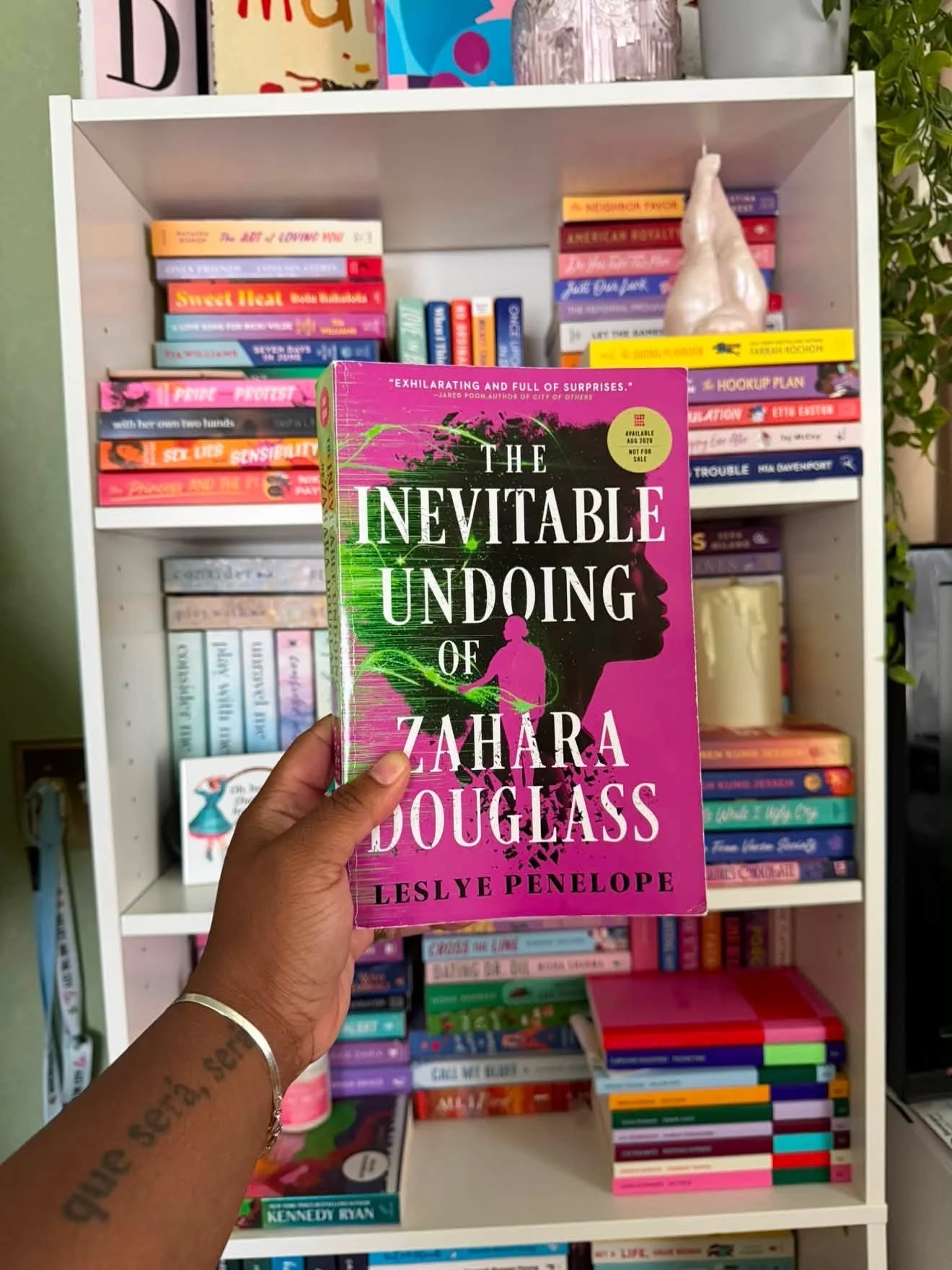
Photo credit: @seradanielle
About the Book
Zahara Douglass is a twin. Well, she was a twin. In 1994, she watched helplessly as her sister Annica got into a strange car, never to return again. And worse, after Annica left, Zahara returned home to a completely different world—one where her sister never existed in the first place.
Four years later, the Y2K crisis is looming on the horizon, and Zahara has settled on the fact that her past was never real. She then finds a slip of paper marked with the license plate of the car Annica got into, and knows her memories are genuine. Determined to uncover the truth, Zahara hires a private detective to look into her sister’s disappearance, revealing that two of the men her late father fought with in Vietnam may hold the answers, she may have a deep-seated power within her, and her father was keeping a secret from the sisters their entire childhood.
As she and the dashingly handsome detective Theo start to discover what happened to the men in Vietnam and how it connects to Annica’s disappearance, things get even more complicated. Zahara learns that she and Annica are just pawns in a grand fight for power, and that the sister’s reunion may come at a price—one that could unravel reality and bring about the end of the world.
The story is told through three POVs. The primary one is Zahara’s story of finding Annica, the next is a series of tape recordings the twins’ dad left for them, and the third point of view is snippets from Annica’s coding, emails, and computer diary.
Interview with the Author
Because The Inevitable Undoing of Zahara Douglass was part of Readin’s Traveling ARC Program, I had the opportunity to ask Leslye a few questions about the book.
Ally: The Inevitable Undoing of Zahara Douglass is a tale of intrigue, coding, mystery, technology, and lots of twists and turns. How easy or hard was it to plan the plotline for the book? What was that process like?
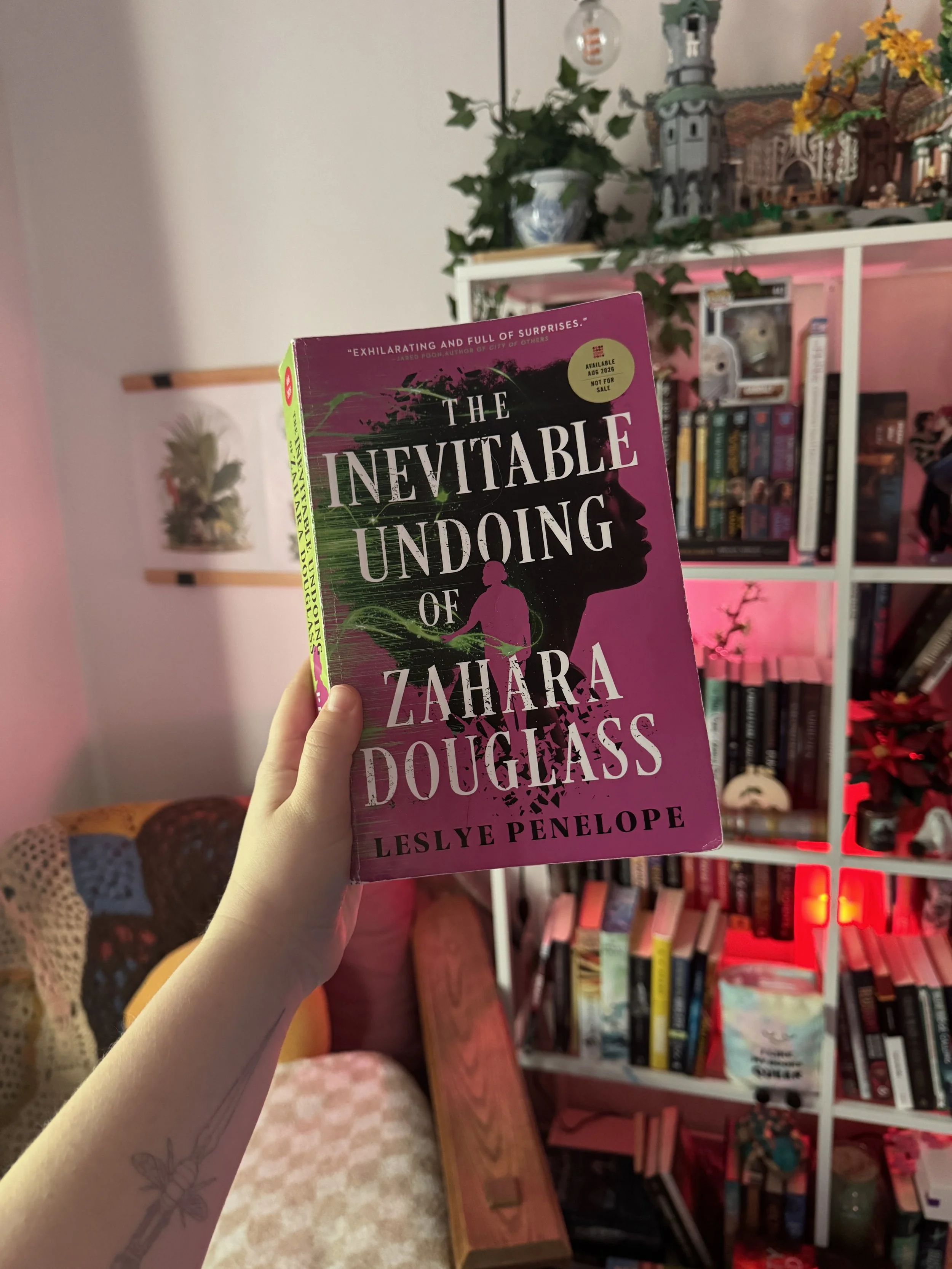
Photo credit: @allys_shelf
Leslye: This book went through a lot of changes to get to its final form. I had a ton of ideas, and figuring out what needed to be in the book and what needed to be cut was a pretty big undertaking. The first proposal I sent to my editor included ancient Egyptian secret societies, Gnostic deities, and a plotline that I derived from the block theory of the universe. I was doing research on quantum physics and really getting in my own way. Of course, my editor told me it was all too complicated . . . and she was right.
It’s always painful to have to go back to the drawing board after spending a lot of time developing these ideas in the first place. But I love getting feedback that makes the story stronger, and often an outside perspective is necessary to reign me in.
For me, plotting a book involves throwing everything at the wall, seeing what sticks, and pruning away the rest. So I worked to simplify my idea and bring it down to the core question: what would you sacrifice for someone you loved? That helped me bring it back to the characters, to the sisterhood, and to the emotional core of the story. Then I could weave back in some twists and turns to keep people turning the pages.
Ally: The book talks a lot about humans and our relationship with technology. What are you hoping readers take away from these themes?
Leslye: I started writing this book long before generative AI was the juggernaut it has become, but the story always had a thread in it about the benefits of technology and the dangers of overreliance on it. The missing sister, Annica, has a chronic illness as well as an affinity for computers and coding.
Her illness affects not only her, but her entire family as they care for her. I wanted Annica to be able to have exquisite control over a sort of virtual reality, to offset the control she did not have over her body and her health. Technology has allowed us to make huge strides in healthcare, in giving freedom and dignity to people with disabilities, and that is just as important as the negative consequences it has also wrought.
Setting the story in 1999, on the eve of the Y2K crisis, ended up being a great parallel to the current fears and realities of the changes that AI is bringing to the world. I hope that the arguments of some of the characters who are more wary of technology resonate and make people think about their own relationship with it more deeply.
Ally: Speaking of technology, Annica is a stellar coder, and there’s lots of technological jargon embedded in the book. Do you also code or was it something you had to research for the story?
Leslye: I’ve been a web developer for over twenty years. My family got our first computer when I was in elementary school and I taught myself the programming language BASIC as well as how to navigate the DOS (disk operating system). I was always the “computer person” in the family, providing tech support to everyone, and I went on to minor in Computer Science in college.
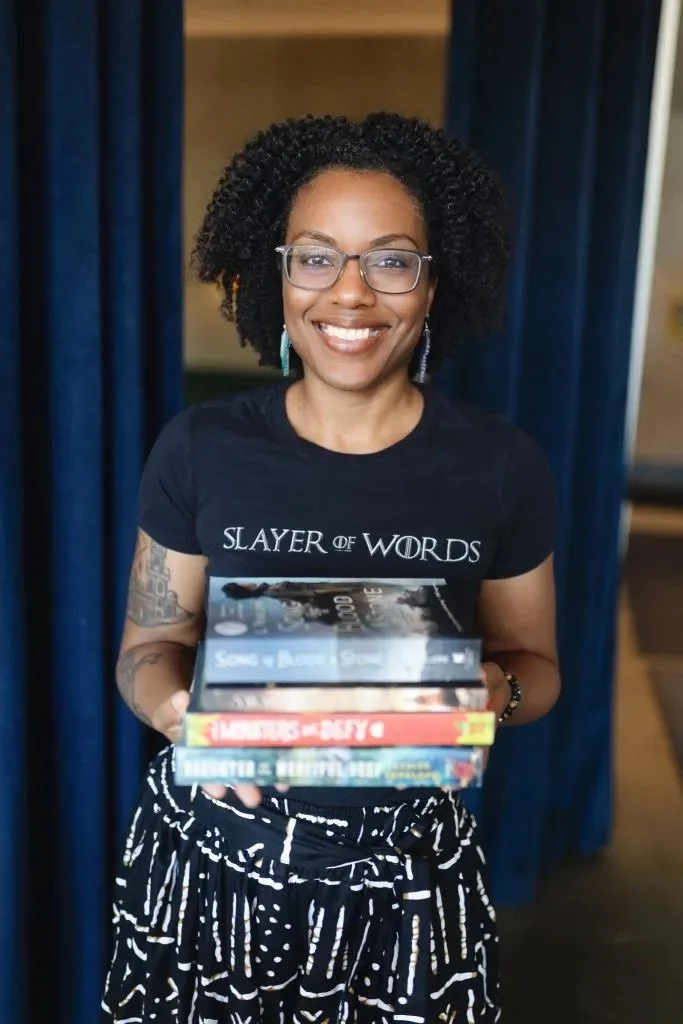
I never had the guts or the patience to become a hacker, but creating the world that Annica inhabits, including the message boards and chat rooms she frequents was my ode to the large part of my youth I spent online, relying on dial-up internet to talk to strangers.
Writing a small portion of Annica’s story in a sort of pseudo-coding language was a challenge I set for myself that I was unreasonably excited about. One of my author biographies states that I sometimes dream in HTML, which is true. Coding dreams are a little disturbing, LOL, but that’s kind of what I wanted the section of Annica’s narrative to feel like. It took a few tries to get something that felt authentic enough, but was also at least partially readable by non-coders.
Ally: Zahara’s sister Annica has sickle cell, a disorder that disproportionately affects Black people. What was the reason behind showcasing this disability?
Leslye: Annica’s chronic illness is a huge motivating factor for the events of the book. I researched a variety of different conditions that would have put a lot of pressure on the family, caused frequent hospital stays and, in the U.S., medical bankruptcy. I chose sickle cell specifically because it does disproportionately affect Black people. It touches so many Black families and as such, for many years, was under researched and not well understood.
This novel takes place in the past, and it’s the near past, unlike my other recent books. While the time period doesn’t include the overt state sanctioned racism of Jim Crow, Black health disparities are a subtler kind of discrimination. I know many people are not familiar with sickle cell, so its use in the novel allowed me to bring attention and awareness to it.
Ally: The Inevitable Undoing of Zahara Douglass is mainly set in December 1999, right before the Y2K scare. What nostalgic item or moment were you most excited to include in the book?
Leslye: I was really excited just to recreate the time period. It's before social media and before the prevalence of these handheld devices that have taken over our lives. Not having a cell phone still wasn’t all that unusual. You still had to print out directions before going somewhere or use an actual map. You could still get lost.
In some ways it was a very inconvenient time, relying on answering machines or payphones or pagers. I won’t say it was simpler, because the problems we had then were just different, but still very complex. However, because I was younger, things seemed simpler.
Ally: The book jumps between a couple different perspectives, but the most interesting one to me is the present day POV of Zahara trying to find her sister. You chose to write this in third-person present tense, while I see most sci-fi fantasy books choose third-person past tense. What was the reasoning behind this stylistic decision?
Leslye: Part of the reason is because the opening of the book that takes place in 1995 is in the past tense, and I wanted to distinguish the two time periods. Then and now. Before the disappearance and after it. The past is a place you can’t get back to and the memories in this story are haunting.
The other reason was that I felt present tense brings you a sort of immediacy. Even though the time period is 30 years ago, the present tense for me just makes everything feel more alive and urgent. You're going through everything as Zahara is in real time. And in this kind of story, with mysteries and twists and turns, it heightened the uncertainty. Zahara is the one person holding on to a present with her sister possibly in it. I felt like the use of present tense helps bring the reader along on the journey second by second as it happens.
Ally: Another perspective we get in the book is from the tapes that Zahara and Annica’s father recorded before he died. He served in the Vietnam war, and what happened both during his time there and after he came back is a very significant part of the story. What were you hoping to showcase in his and his friend’s stories?
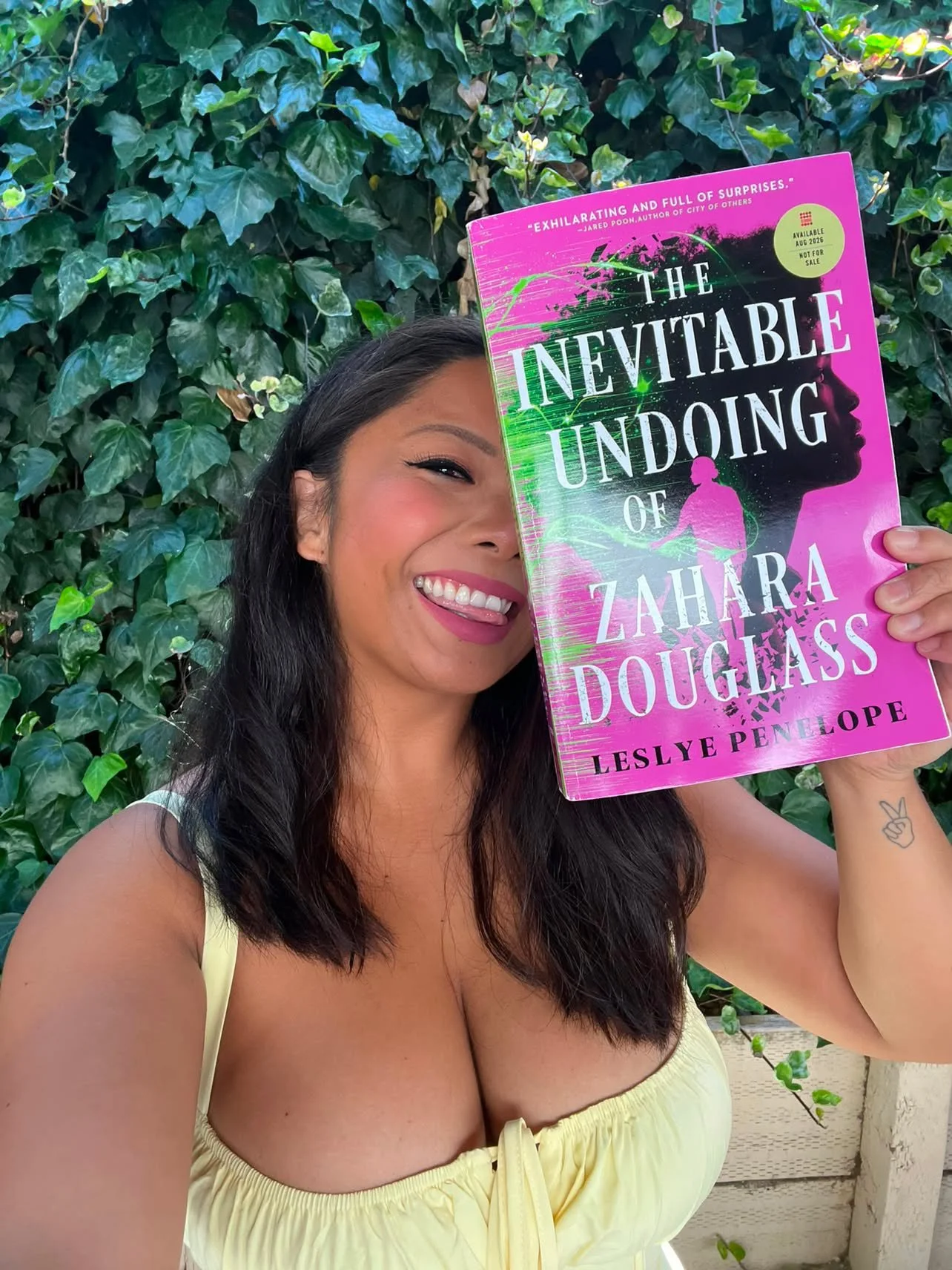
Photo credit: @bookish.millennial
Leslye: The novel is about sisters and family and legacy, and about memory and time as well. Having Zahara be able to listen to her father's tapes to learn exactly what his memories were felt like a narrative throughline that was needed. Being able to hear the recorded voice of a long-dead parent is a little bittersweet, kind of heartbreaking and heart mending all at once.
Plus, the experiences of her father's squad in the war directly affect everything in the story, and he is not there in the present day to speak for himself. The tapes give important backstory about the characters, their motivations, as well as the fantasy elements of the story. The ghosts of the past always inform the present and the hole that the sisters’ father left is a big one.
Ally: What’s something that you would bring back from the 90s?
Leslye: Answering machine messages. No one really pays attention to your outgoing voicemail message anymore. Who even leaves voicemail these days? But back in the day, we made elaborate outgoing messages for the answering machine asking people to leave us a message. There were skits, there were musical clips, there were jokes. It was a whole industry. I used to draft my outgoing message with the same care I take to draft my stories now. The creativity and thought that went into those was just another form of self-expression that allowed you to showcase your personality and interests. It would be fun to see those have a comeback.
Ally: The Inevitable Undoing of Zahara Douglass is one of Readin’s traveling ARCs, where readers have the chance to receive an ARC, read and annotate the book, and then send it to the next reader. As you get the book back from those readers, what are you most excited to see marked?
Leslye: I'm excited to see what the readers have highlighted as their favorite parts or parts that stand out to them. It's always really fascinating to see if those line up with some of my personal favorites and where they diverge. Getting a peek into someone else’s thoughts and reactions is like having a virtual book club all in the margins of the book.
I write for myself first as a reader, but once the book is out in the world it belongs to everyone who reads it, and I hope that they can connect with the different themes and characters as much as I do. So being able to witness that visually in a physical copy of the book is something I am definitely looking forward to.
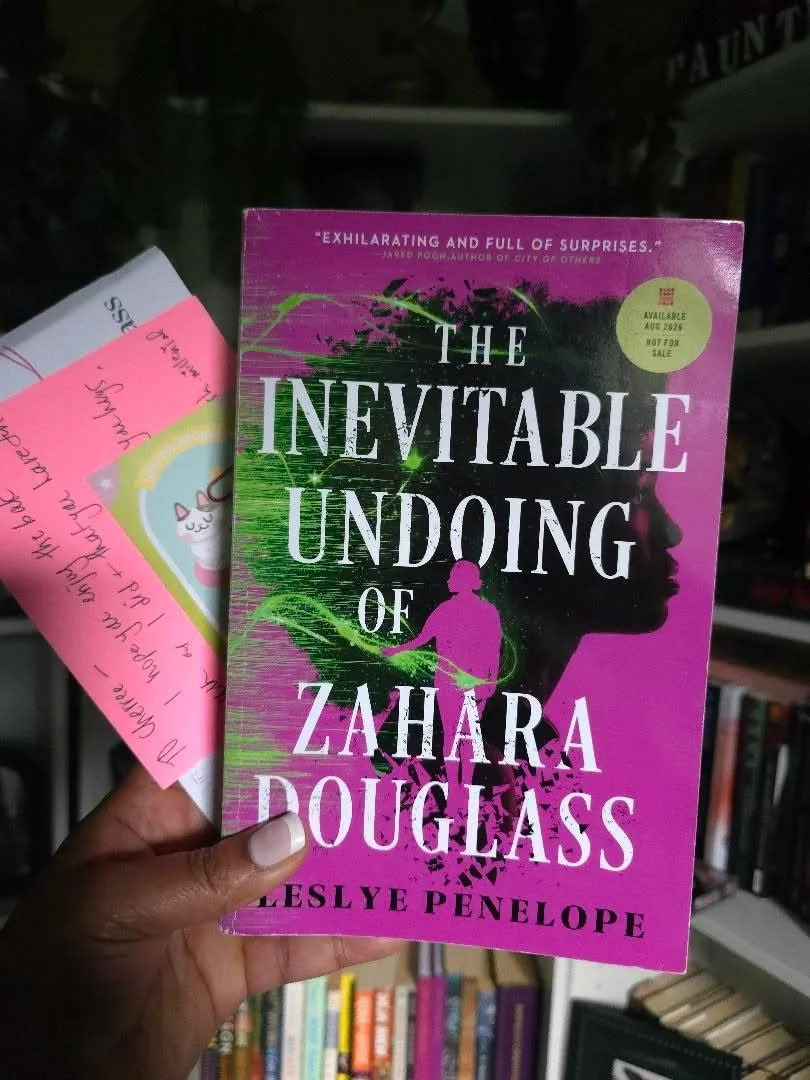
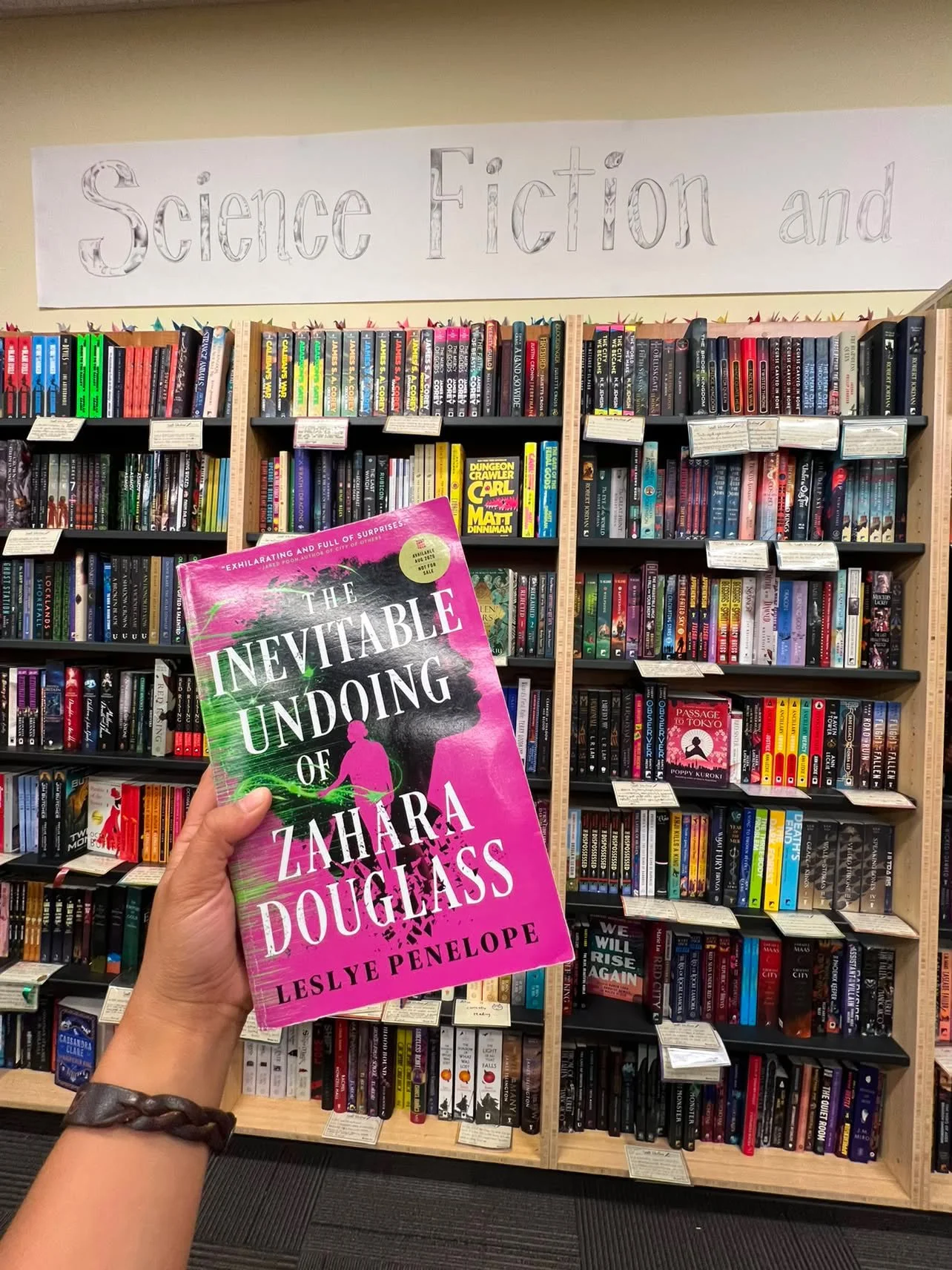
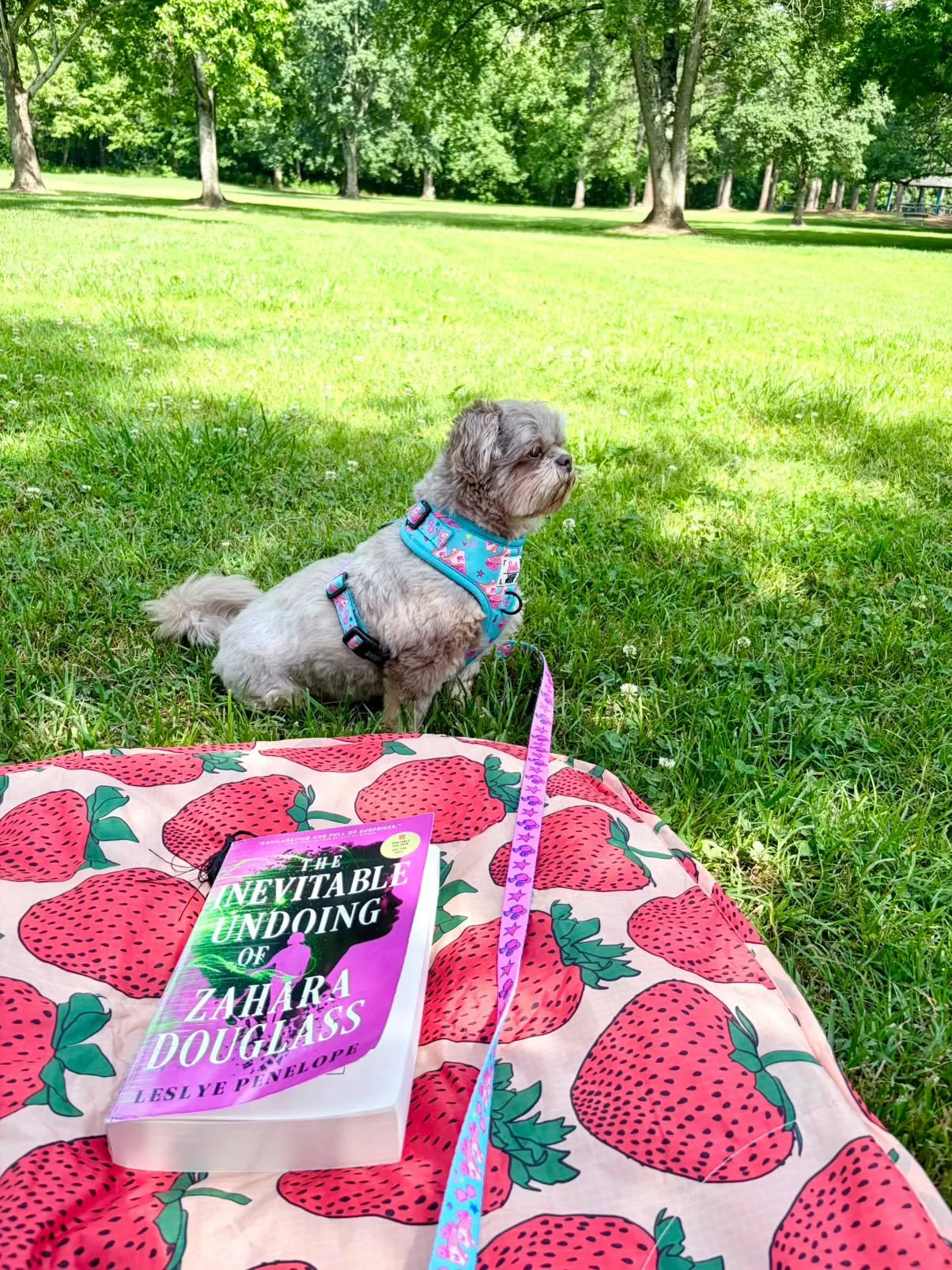
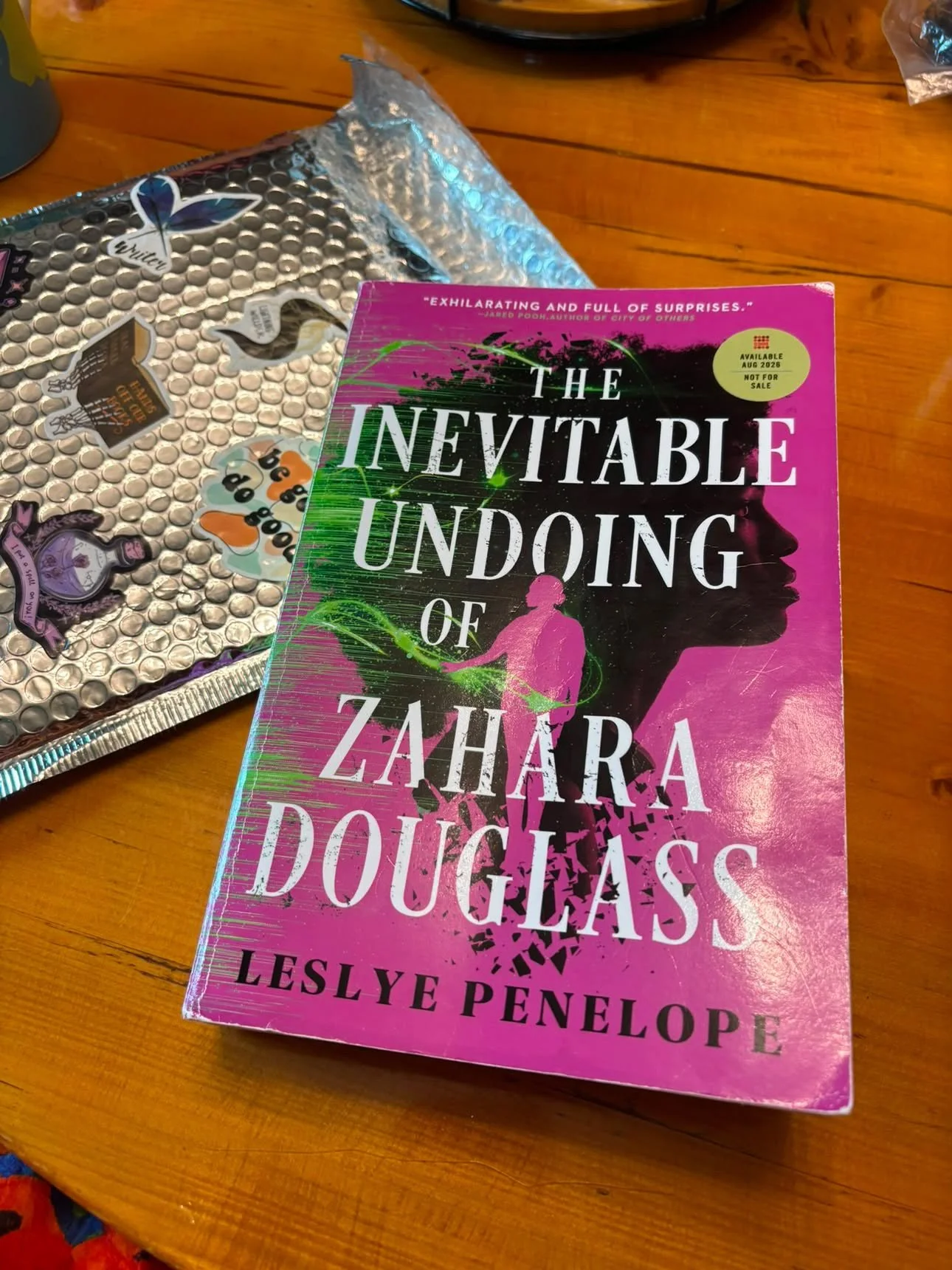
Photo credit, left to right: @ireadblackbooks, @bookish.millennial, @crystalsnovelnook, @possibilitymaven
The Inevitable Undoing of Zahara Douglass was our latest book in Readin’s Traveling ARC program. Thank you to all who applied to get the chance to read and annotate the ARC, and thank you to Cherre, Kristianna, Sera, Brittany, Crystal, and Ally for participating. Our tARC programs are fun for readers and authors alike, so stay tuned to see what book might be next!
Interested in our previous traveling arcs? Check out our list at bookshop.org (affiliate link).