

Haiti, ASL, and Queer Representation
Interview with Readin's Traveling ARC Author,
Falencia Jean-Francois
By: Ally Hendricks
Edited by: Emilee Saigh
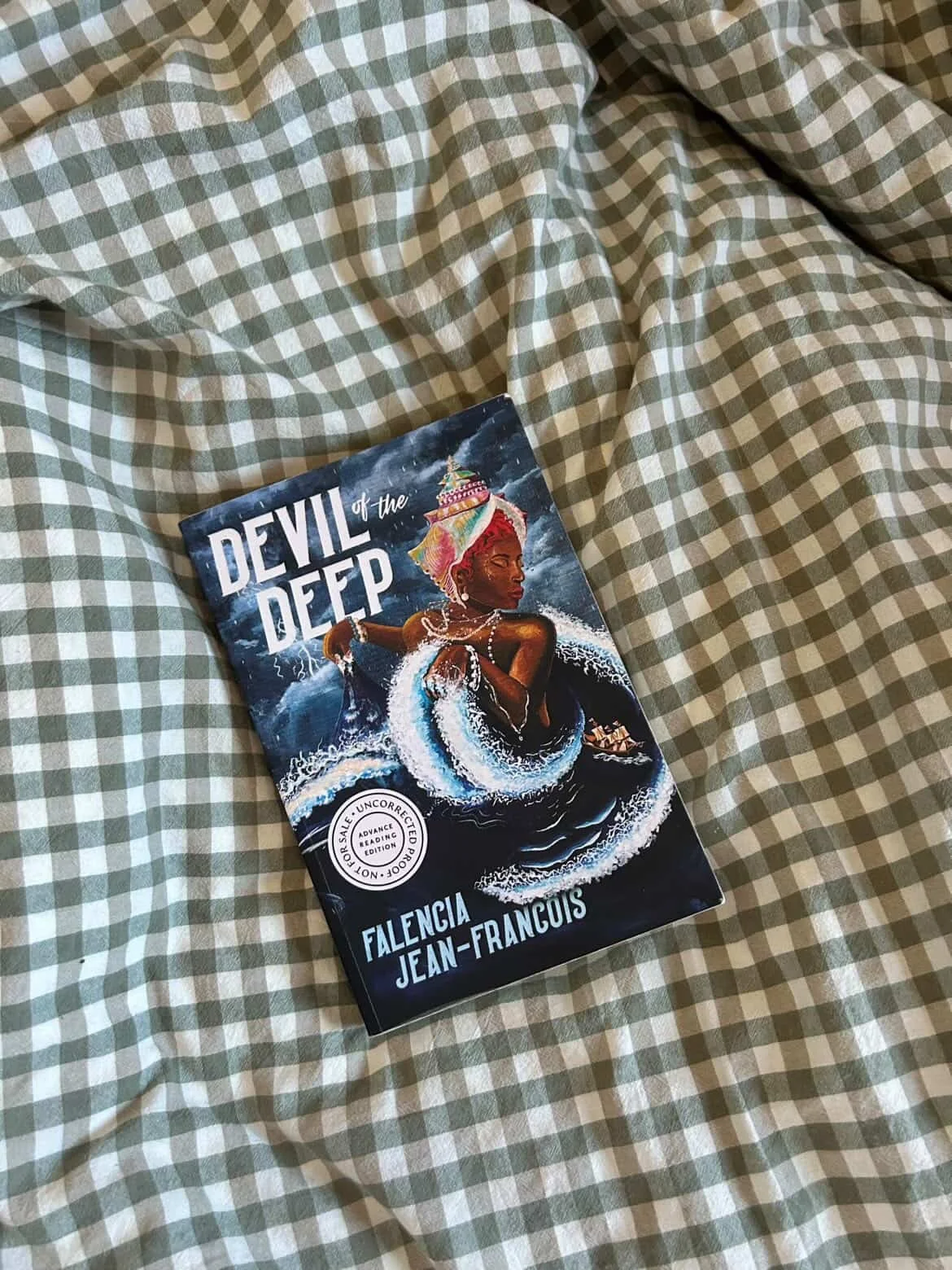
Photo credit: @mhbookshelf
When I read the first chapters of Falencia Jean-Francois’s debut, Devil of the Deep, I knew immediately it would be a new favorite read. First off, I love a queer book that is set on the sea (was anyone else’s bi awakening Pirates of the Carribean???), each character’s POV was equally exciting to read, and Jean-Francois’s writing is so immersive. With Haitian culture embedded within the story, the use of American Sign Language (ASL), and queer representation, I was looking forward to conversing with the author about her choices and their writing experience.
About the Book
At its core, Devil of the Deep follows the story of Pearl, a mermaid on land running away from her religious leaders. Pearl grew up very invested in her religion, but after startling events, she finds herself alone and hiding from the leader who wants to make her his bride (he is old and gross). She also apparently holds the key to freeing her people and does not know what to do with it or why they need freeing in the first place. But the cherry on top is her voice does not work on land (yes, this is a nod to The Little Mermaid), and she is unable to communicate with those who do not know the Fisherman’s signs.
Pearl’s isn’t the only story readers explore; there are two other points of view (POVs) to dive into. Nnenna is the famous pirate, the Devil of the Deep, whose goal is to take down the fleet and its religious military. She ends up running into Pearl who is alone and unable to communicate with her kidnappers. Luckily, Nnenna knows the Fisherman’s signs and is able to learn about Pearl’s predicament. She ends up agreeing to help Pearl (much to her first mate’s chagrin), and they start on a quest to figure out what this key is and how it will save the merpeople. Bonus points for Nnenna—it sounds like whatever happens means she’ll get to rough up the fleet along the way.
Finally, we have Lu, a fleet officer who has been recently promoted. As he makes his way up the ranks, he learns more about the secrets behind keeping their god happy and the relationship they have with those who live under the sea. As he embarks on a journey to capture Pearl and complete a ritual to save the merpeople, his knowledge and faith are tested time after time, leaving Lu to wonder how far is too far? and what does the mythologically excommunicated devil-goddess have to do with his current circumstances?
Devil of the Deep releases April 7, 2026 from Bindery Books’s imprint, Left Unread. The imprint is run by creator Micheal Laborn, who seeks to spotlight Black and Brown authors in the publishing space. Devil of the Deep features sapphic, achillean, and transgender representation, is set in a queer-normative world, and is written by a queer, Haitian author.
Interview with the Author
Because Devil of the Deep was part of Readin’s Traveling ARC program, I had the opportunity to ask Falencia a few questions about the book.
Ally: Devil of the Deep is one of Readin’s traveling ARCs, where readers have the chance to receive an ARC, read and annotate the book, and then send it to the next reader. As you get the book back from those readers, what are you most excited to see marked?
Falencia: I’m honestly so curious to see what resonates with people enough for them to want to make a note in the book! I humbly hope for tearstains all over Chapter One, angry scribbles all over Chapter Thirteen, and question marks where I dropped little, Book Two easter eggs! I don’t know if those count as annotations, though!
Ally: The book explores blind faith and challenges the idea of Christian Nationalism. What inspired you to explore those themes in the story?
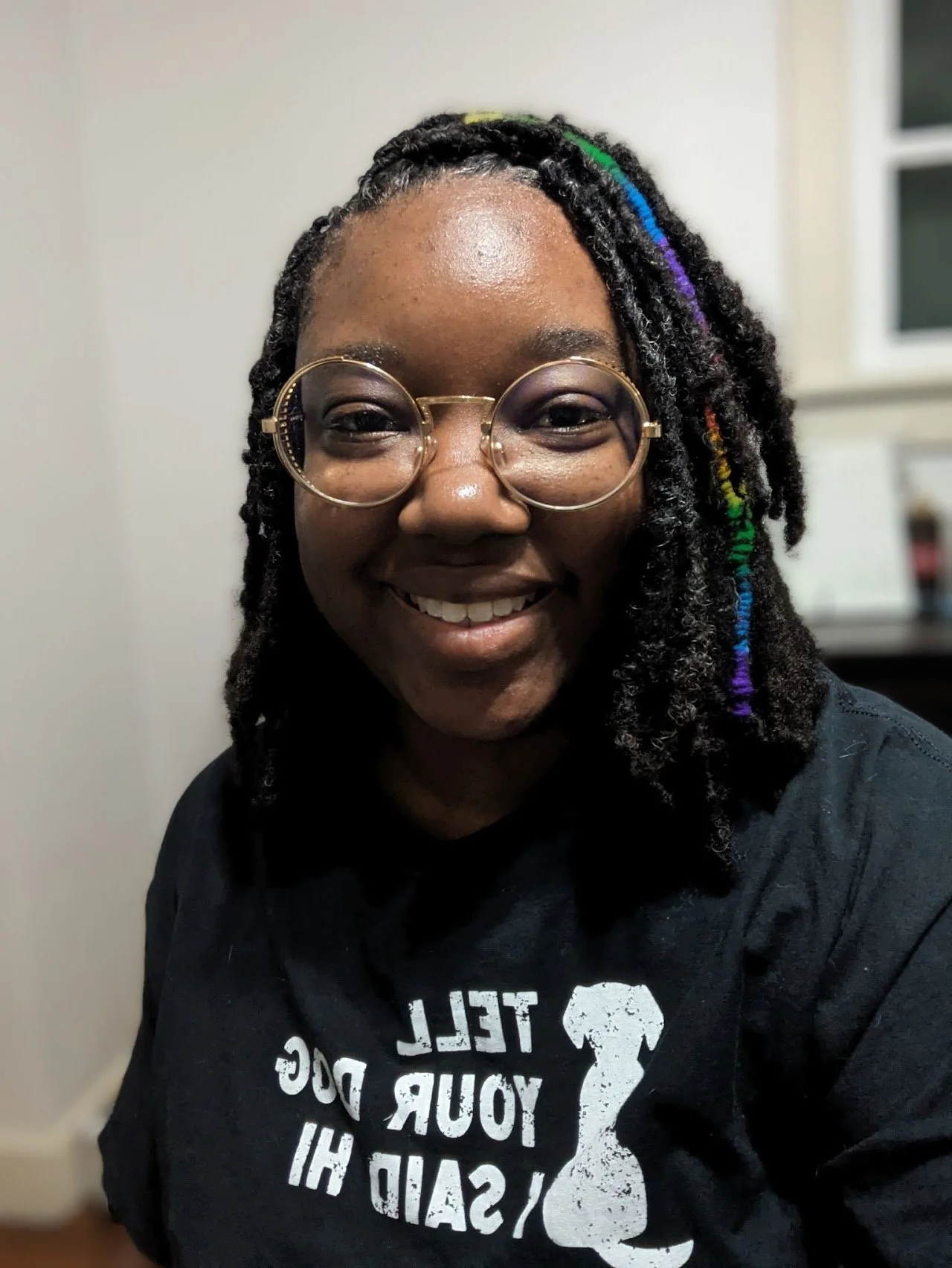
Falencia: The inspiration for those themes in Devil of the Deep was the evolution of my relationship with organized religion. I was a member of a cultish, Christian organization from ages nine to nineteen and, amongst other harmful practices, the leaders constantly demanded blind faith. “Trust in the Lord with all thine heart and lean not unto thine own understanding.” In order to be considered a “faithful” member, I had to suppress huge chunks of myself—my queerness, my gender-nonconformity, my Blackness, my natural skepticism.
Unlearning blind faith through deconstruction has given me the freedom to constantly question what I am being told. When I see religious political leaders pushing the idea that their belief system is the only valid way to engage with the mysteries of life, it takes me right back to my childhood where I was force-fed ideas and never allowed to determine the truth for myself. It’s dangerous because it is so transparently self-serving. These so-called leaders need an impressionable society who won’t question them so they can stay in power. Call me a revolutionary, but my ancestors didn’t fight for their freedom and establish the first Black republic in the world for me to end up in chains.
Ally: Despite challenging Christian Nationalism, you chose to make the world queer-normative. What was your favorite part about exploring themes of queerness without limiting it to religious oppression or harmful societal pressures?
Falencia: My decision to make the world of Devil of the Deep queer-normative is closely tied to a promise that I made to portray Haiti in my work as often as I could—Haiti as it was, is, and could be. At the moment, Haiti is far from queer-friendly and I wanted to show a version of the country that is still rich in culture and still brimming with Haitian pride that also includes every identity. My favorite part of this exploration has been the impact on myself and other queer Haitians. I could never have predicted how much relief it would bring me to marry these two parts of my own identity and how much joy it would bring me to hear from other queer Haitians for whom Devil of the Deep does the same.
Ally: If you could pick one song to represent the vibe of Devil of the Deep, what would the song be?
Falencia: I’m really into Cain Culto right now! He’s a queer, Latino artist whose music explores queerness and religious deconstruction. I feel Devil of the Deep in so many of his songs because the themes are so similar, especially where he blends his Indigenous heritage and Latino roots with his Appalachian upbringing, but the one song that has really been resonating lately is “Sold My Devil.” It’s an absolute banger, and its connection to Devil of the Deep reaches beyond the pages of this first book into the heart of the story I’m trying to tell.
Ally: The three main characters, Nnenna, Lu, and Pearl, all have different experiences, personalities, and strengths. What part of each character do you identify with the most?
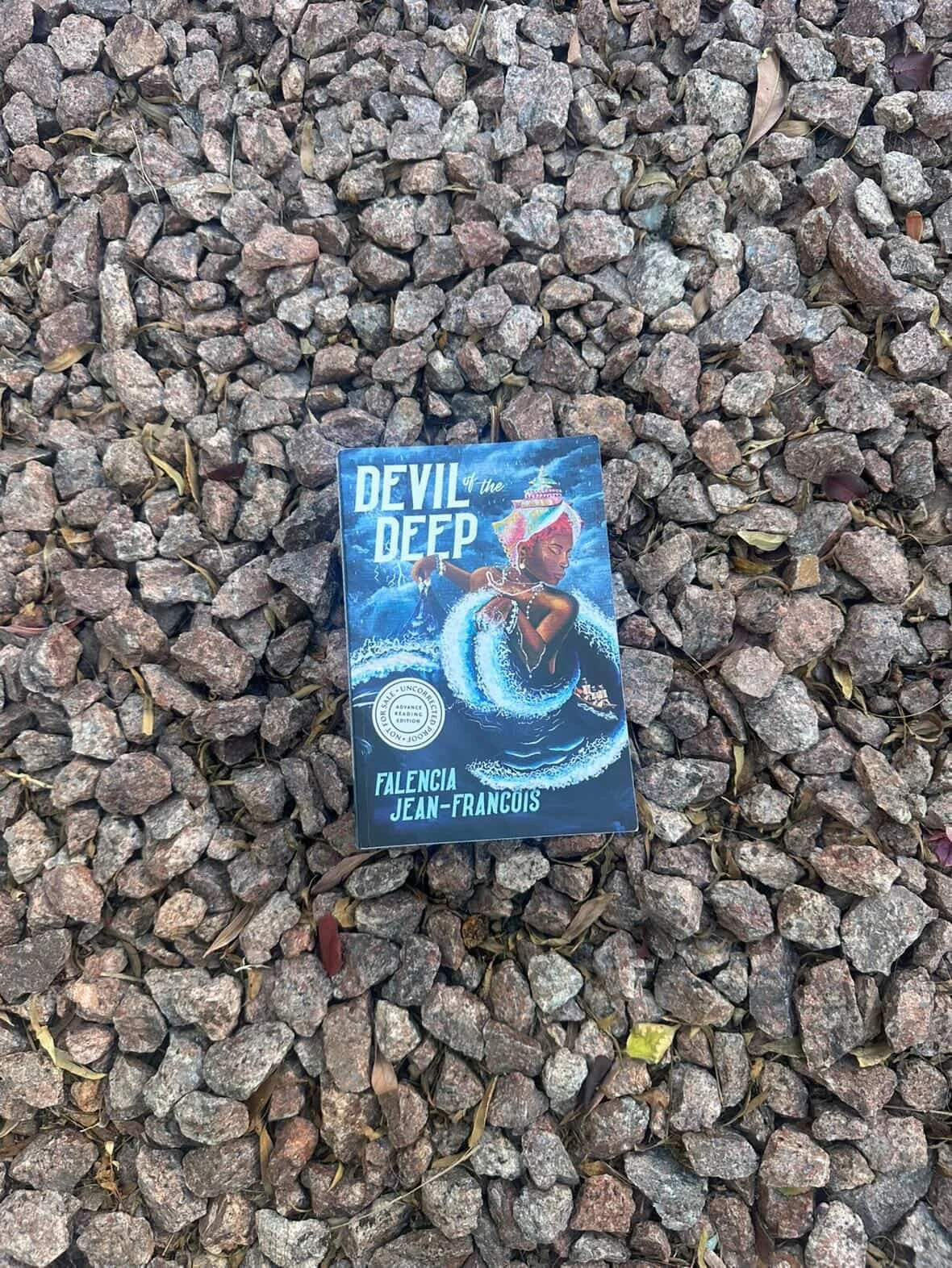
Photo credit: @stacktheseshelves
Falencia: Nnenna, Lu, and Pearl represent the evolution of my relationship with the church I was a part of for ten years. Pearl is me at my most innocent, when all I could see was the family I needed. Lu is me at my most obedient, when I was willing to do whatever the church needed me to do because I believed so completely that its teachings were true. Nnenna is me after realizing that I’d been deceived, full of fire and hungry for vengeance.
Ally: The use of sign language is heavily featured in Devil of the Deep, and your description of the signing is similar to American Sign Language. What did your research process look like to include ASL in the book?
Falencia: I have been fascinated by languages and cultures for a very long time, and I have a deep love for ASL! When I was in college, I took two semesters of ASL as part of [my] Linguistics major. I’m not anywhere near fluent, but when I was better practiced, I could briefly let go of the complex processes required for me to produce speech and convey ideas with just my hands and facial expressions. When I was writing Devil of the Deep, I relied heavily on multiple ASL video dictionaries. I made sure to double-check and cross-reference to get the most accurate representation of the ideas I tried to convey.
Ally: Devil of the Deep is Bindery’s first acquisition of a previously self-published book. What has been your favorite part of the process, and how did you decide what to change or add to the final draft?
Falencia: My favorite part of the republication process has been working with my amazing editors! When I self-published Devil of the Deep, funds were so limited, so I had to be very selective when it came to editing. Bindery was able to provide Devil of the Deep with the works, and I’m so grateful! I took full advantage of the expertise I had access to. I wanted to stay true to my vision of the book, but I also wanted to make sure readers would have the best experience, and the editor provided that insight.
Ally: You’ve stated that an early reader said Devil of the Deep has anime vibes. If the book were made into an anime-style movie, who would you want to voice the main characters?
Falencia: A Devil of the Deep animated film would be a dream! I would want to use the opportunity to thrust some Haitian performers into the spotlight. I would cast Krystel Roche to voice Nnenna and Naya Desir-Johnson to voice Pearl. I would want someone trans and Haitian to voice Lu because that representation is so important. I haven’t come across anyone yet, but I’m keeping my eyes and ears open!
Ally: If you could get one quote from Devil of the Deep tattooed, what quote would you choose?
Falencia: I am actually getting a Devil of the Deep tattoo soon, so this question is perfect! I would get “Ou gen san mwen,” which is Haitian Creole for “You have my blood.” Without giving too much away, this line becomes an important part of Nnenna’s journey. I included it as a reminder to myself that no matter where I am, Haiti is always in my blood.
Ally: In one of Micheal Laborn’s posts on Bindery, you said, “The divide between queer pride and Haitian pride is a chasm waiting to be bridged by understanding,” and Devil of the Deep is your contribution to those bridges. What do you hope readers take away from the story in this regard?
Falencia: Representation is so important! Devil of the Deep is a book full of unapologetically queer Haitians living in a world where their queerness is fully accepted. I want queer Haitians to read it and feel seen. I want non-queer Haitians to read it and see what could be.
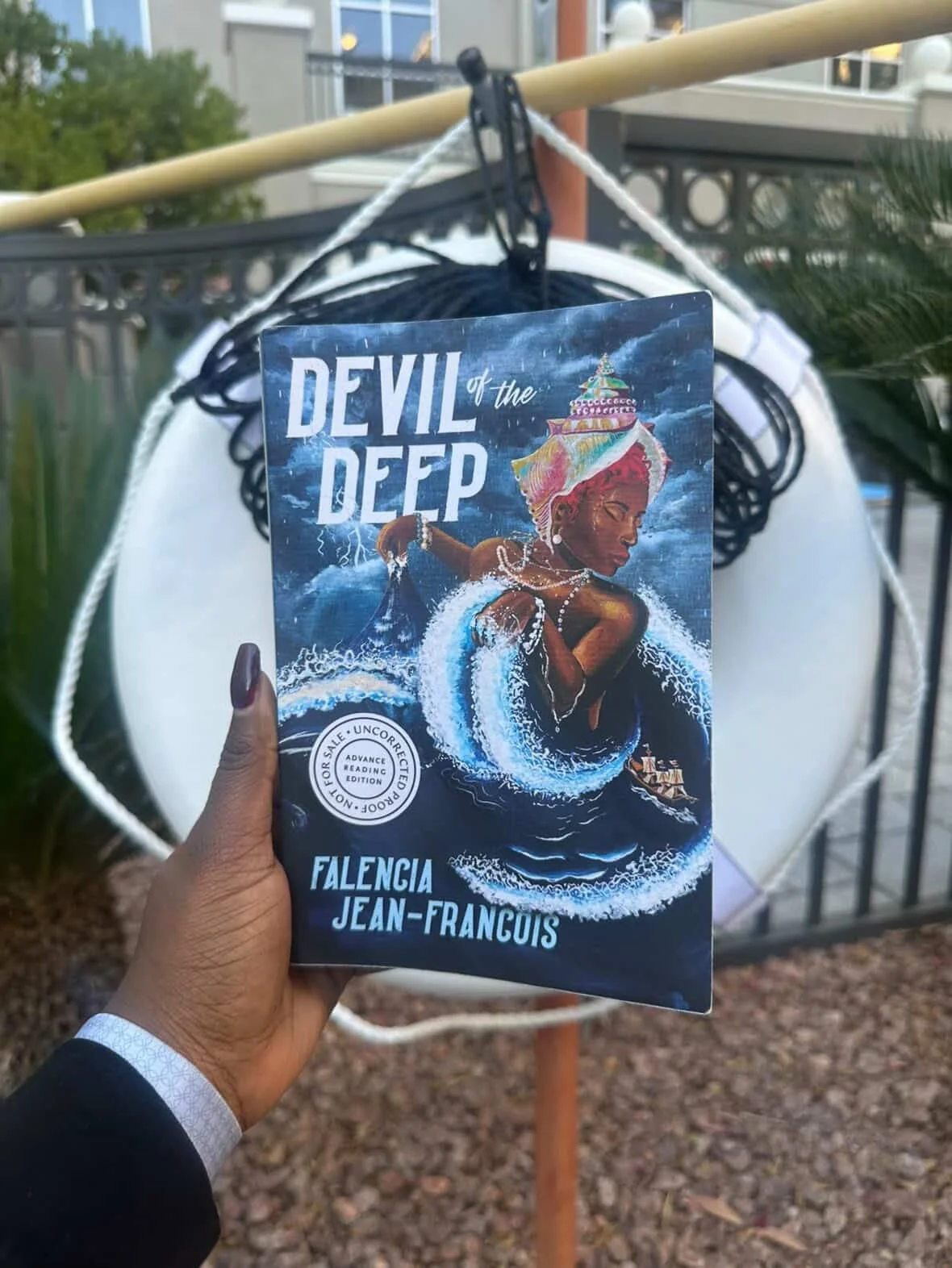
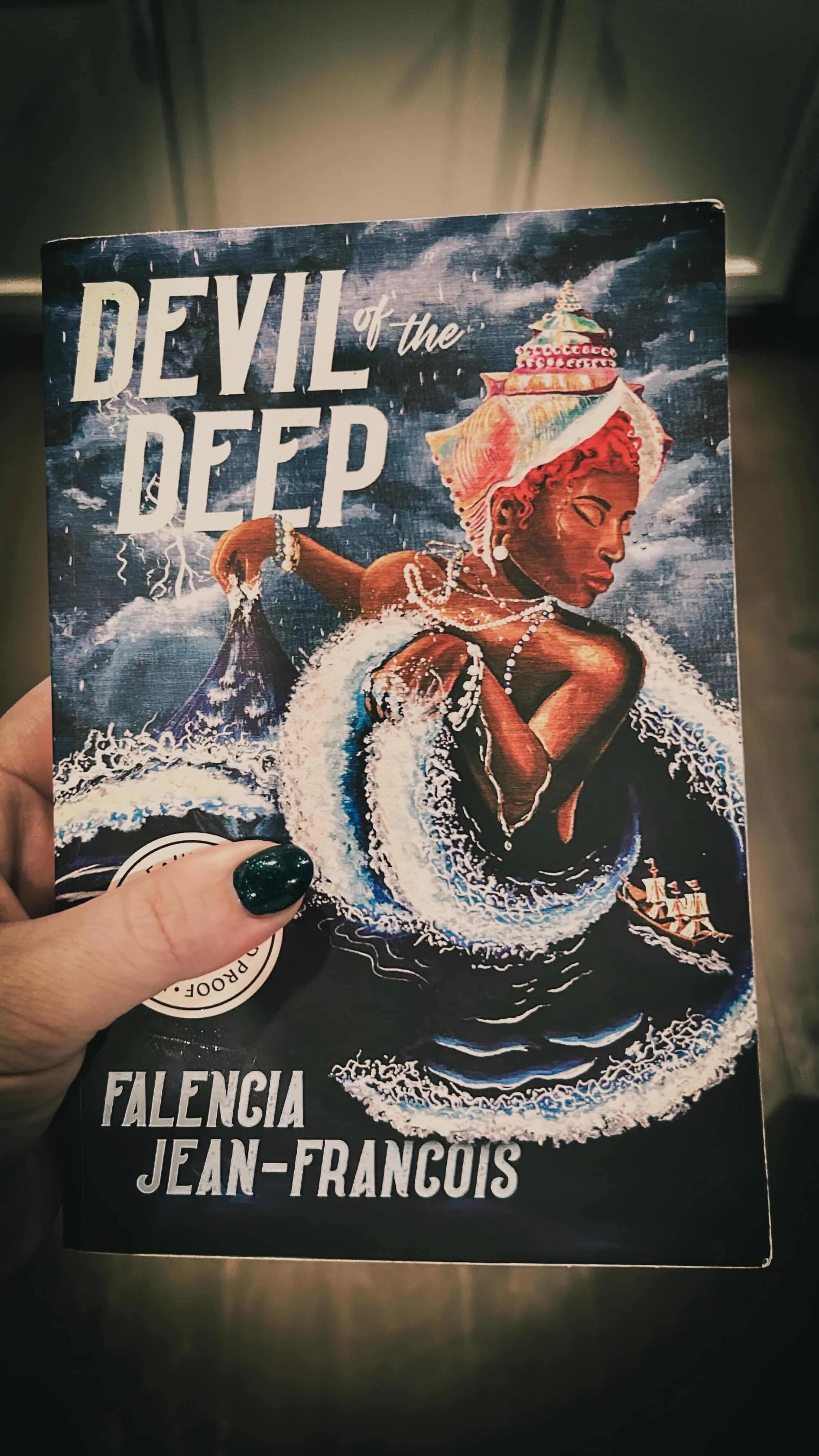
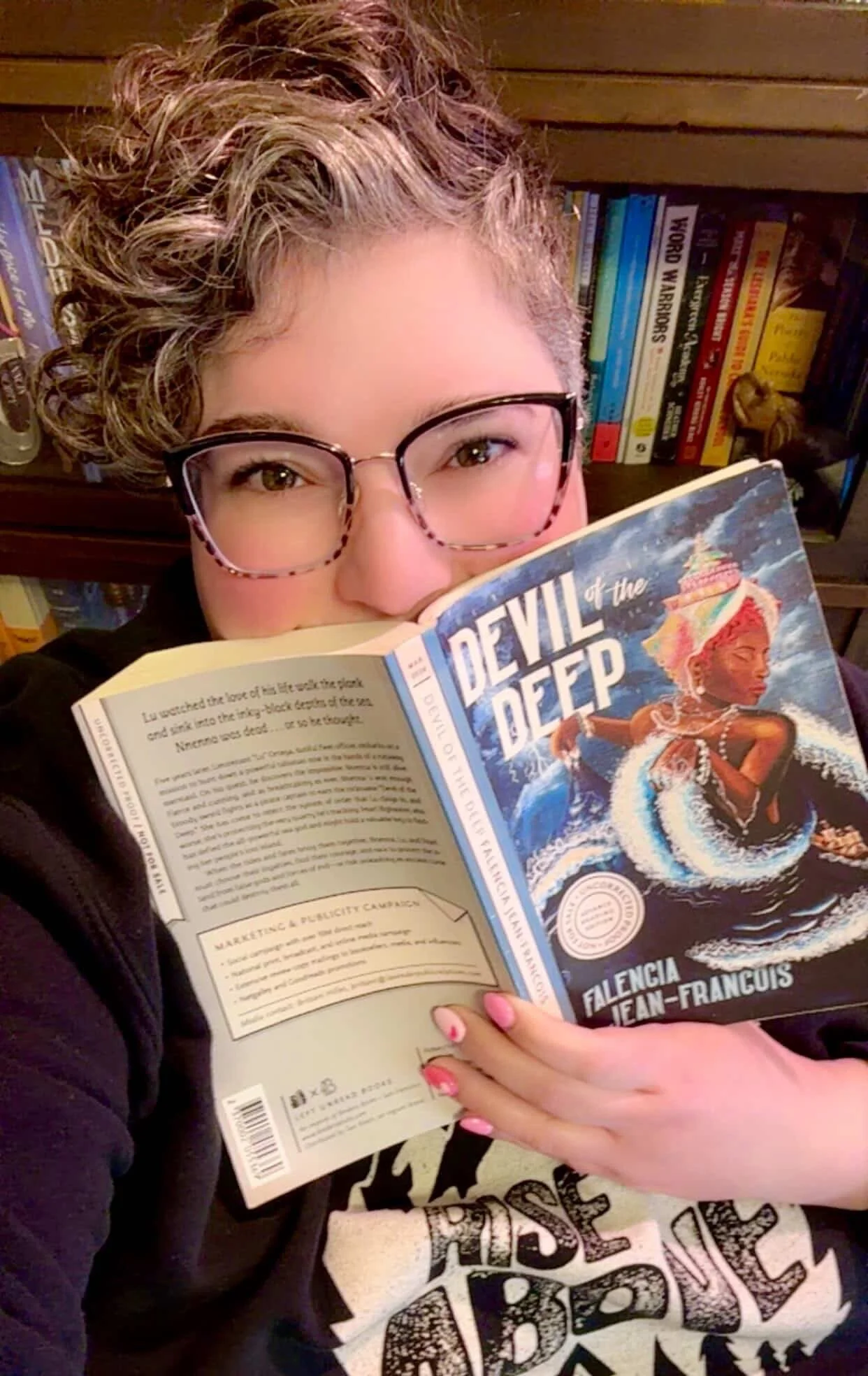
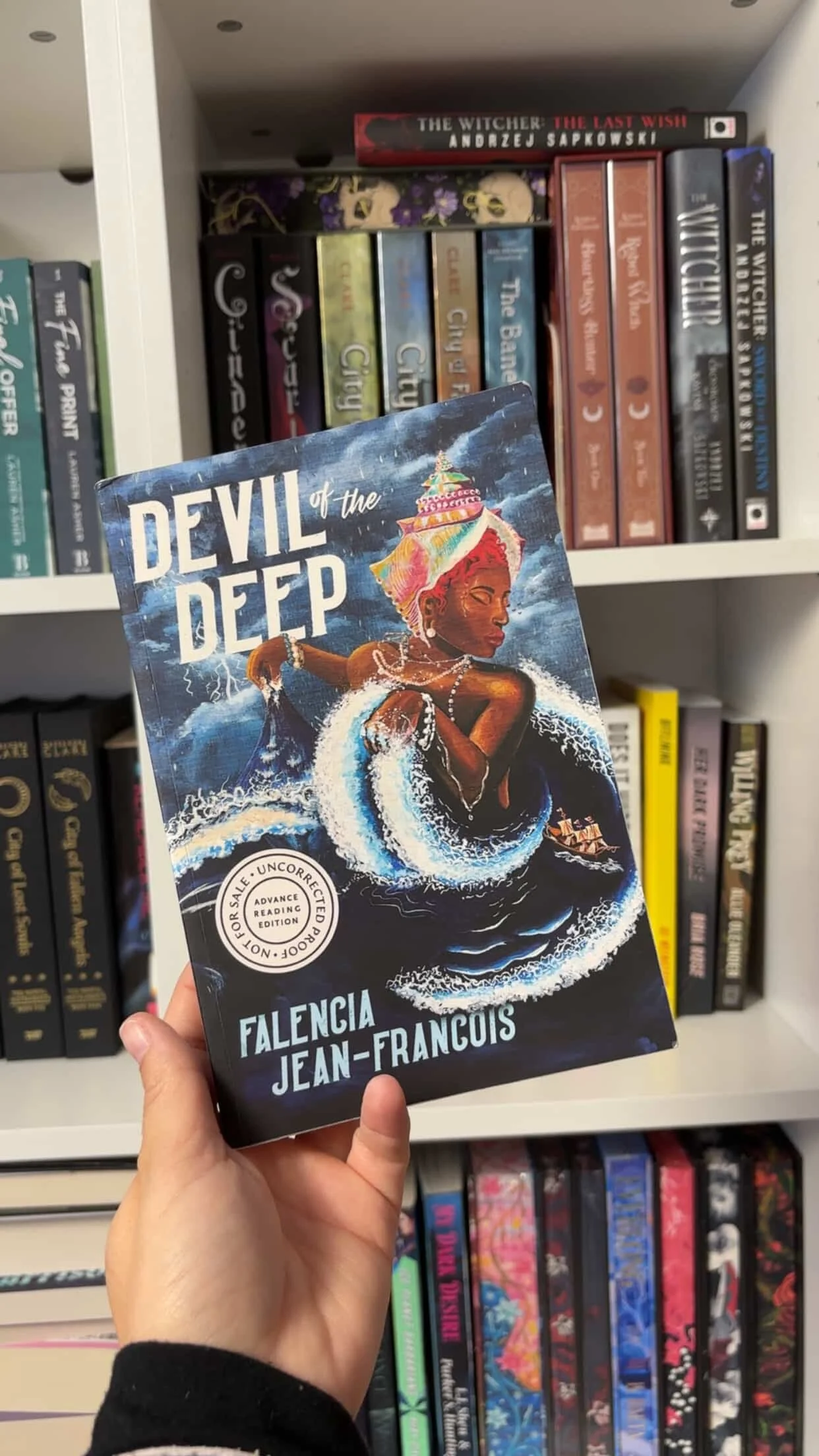
Photo credit left to right, @stacktheseshelves, @books.and.bad.ideas, @shelf.obsession, @minareadsallday
Devil of the Deep was our latest book in Readin’s Traveling ARC program. Thank you to all who applied to get the chance to read and annotate the ARC, and thank you to Angela, Jordan, Maddy, Mina, Ardent, and Jamie for participating. Our tARC programs are fun for readers and authors alike, so stay tuned to see what book might be next!