

Reading is Now a Commercial Aesthetic
By Ash Mojica
Edited By: Reilly Nelson
Would you have thought that in today’s market, we would sell reading as an aesthetic to mainstream audiences? Coffee mugs with Jane Austen-inspired quotes. Tote bags with Shakespeare’s face printed dead center. It might be hard to believe, but what was once a nerdy and lonely hobby is now a hot product.
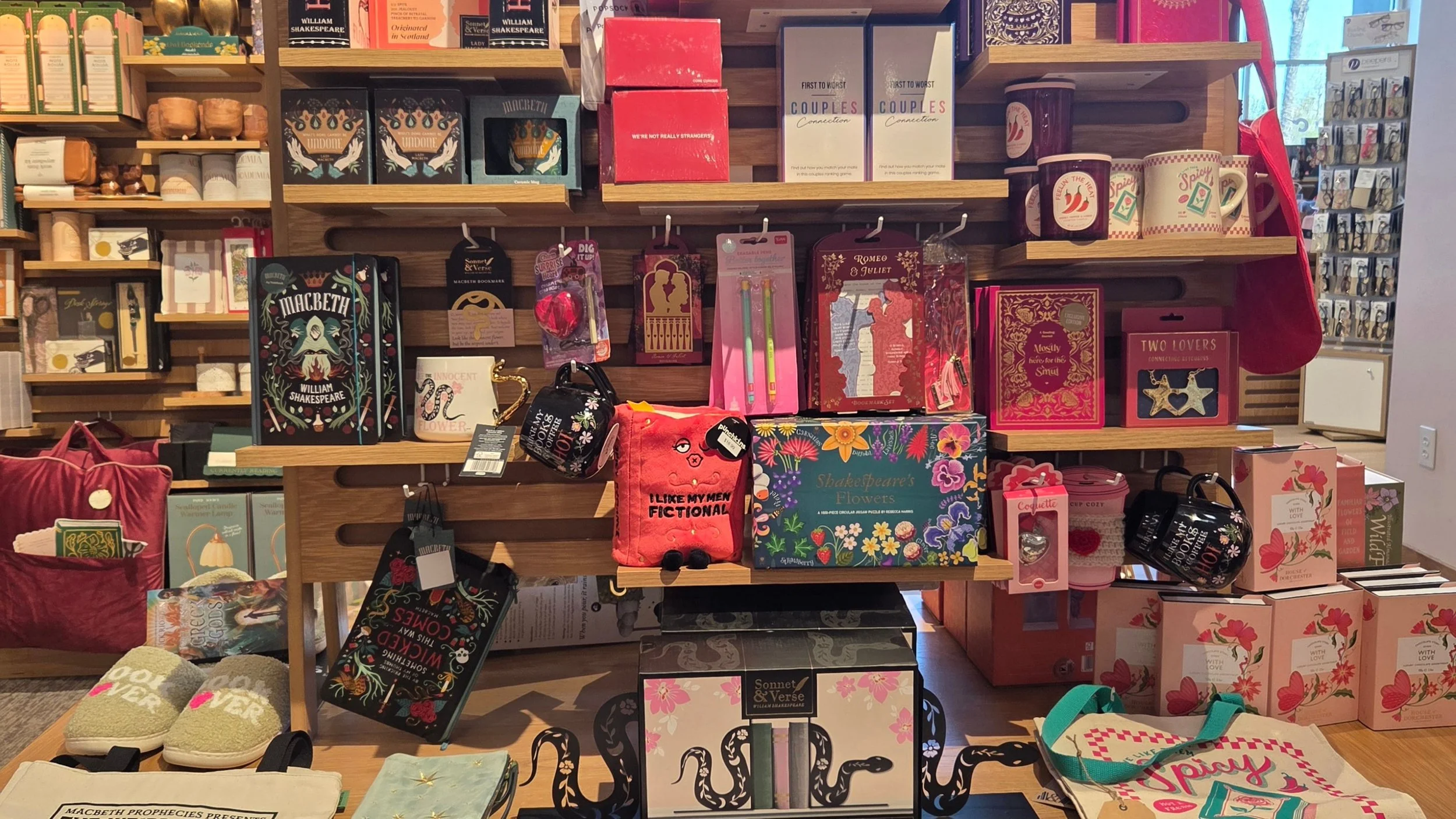
A Barnes & Noble display is themed around the romance genre with bookish decor and trinkets.
What is the Bookish Aesthetic?
The Merriam-Webster dictionary defines Bookish as “of or relating to books.”
What I deem the bookish aesthetic, or the "BookTok" aesthetic, is a style centered on reading with little substance.
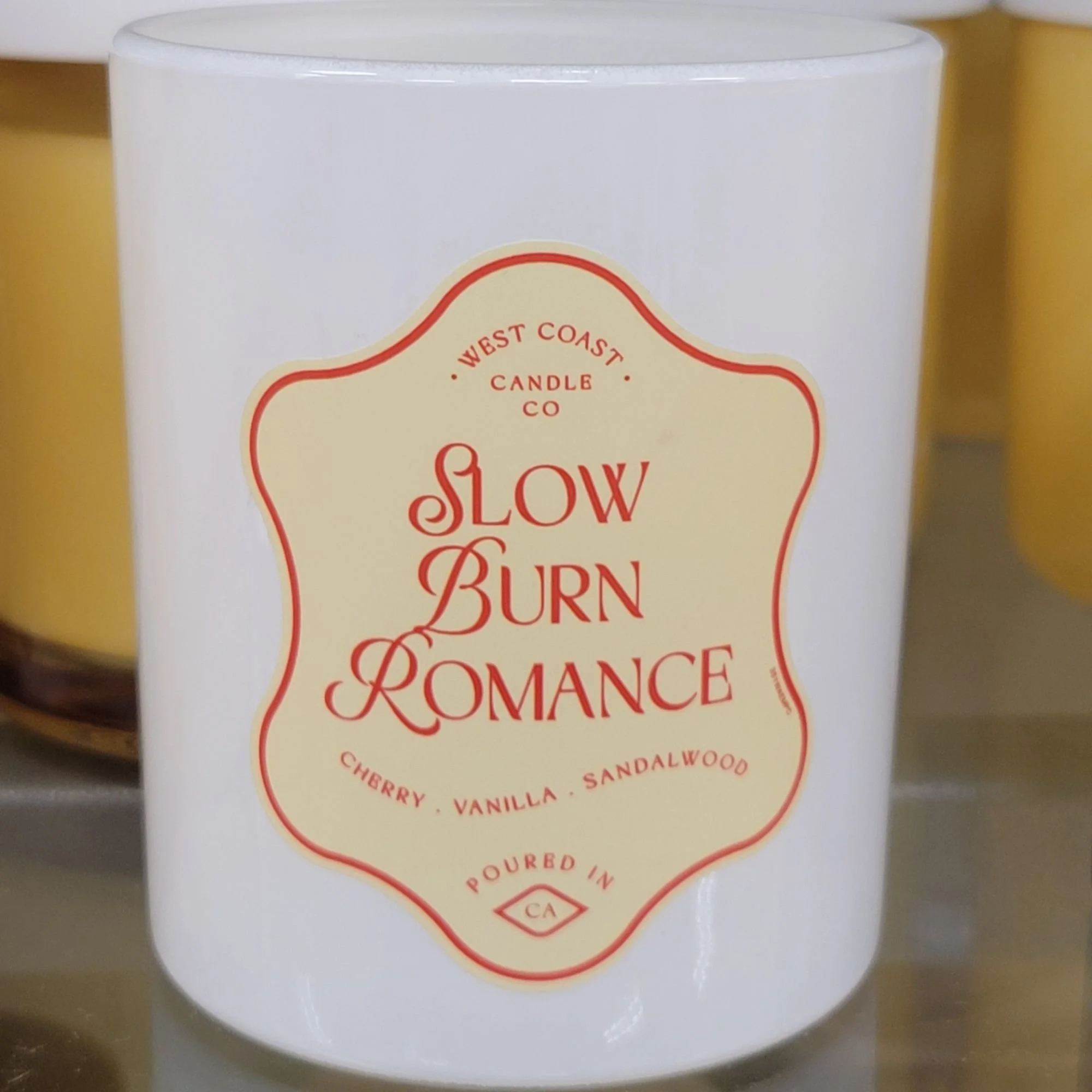
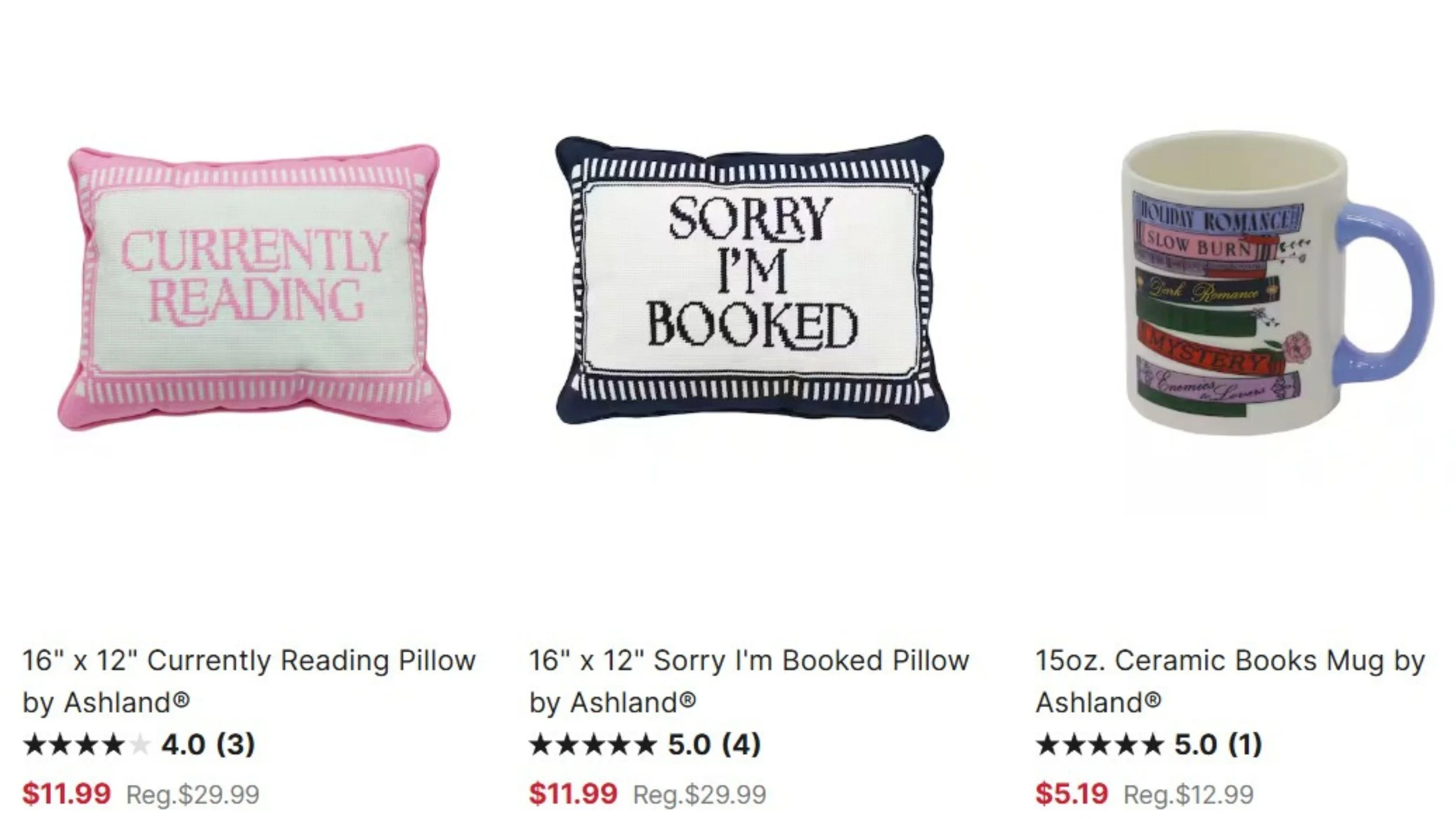
It is merchandise consisting of, but not limited to, mugs, tumblers, tote bags, wall decor, and table decor with phrases that will soon become outdated, like “hot girl book club” or “drink coffee, read books, repeat.” Some products have even gone beyond bookish expressions and have started adding merchandise with genre tags (most notably romance), slapping words like “spicy,” “slow burn,” and “dark romance” on numerous products.
These wares aren’t purchased by your friendly artist at an artist event, but sold at big-name retailers.
In January, the arts and crafts specialty retailer, Michaels, announced it was launching five exclusive pop culture and design trend collections, one of which is Next Chapter.
The brand describes itself as “cozy, clever, and BookTok-coded.” The collection sports bookish merchandise, from tabletop decor with phrases like “Fantasy Reader” and “Romance Reader,” to throw pillows with “Read the Room” stitched at the center, dinnerware, coaster sets, bookshelves, and more.
This BookTok aesthetic grows thanks to the reach of social media influencers. TikToker @jhreads posts content of stores with bookish finds. Retailers include Michaels, T.J. Maxx, and Marshalls. The merchandise shares a similar aesthetic: simplistic designs, pastel colors, and literary wording.
But why is it important to understand what the bookish aesthetic is?
Despite the “bookish aesthetic” title, these goods aren’t targeted toward hardcore book readers, but instead for the casual consumer.
Buying Books Versus Reading
It’s no secret that reading and buying books act as separate hobbies.
In an article from Medium, Bryce Allen writes, “It is all too easy to buy more books.” Allen emphasizes that buying books becomes an “endless race to consume and acquire,” leading to less reading. Consumption is a trap many people fall into, no matter their reading habits.

Reading requires a set time, a schedule to maintain, a comfortable space, and a set mind.
In “Books and Reading Are Two Different Hobbies” by Danika Ellis, “books” themselves can be categorized as their own hobby that is less time-consuming.
“[Books] require nothing from me. I can stare contentedly at them and fantasize about an incredible library . . . I can participate in the bookish online community even if I’ve been in a reading slump for weeks (or months, or years),” writes Ellis.
If we put together Allen and Ellis’s arguments, the consensus is that consuming bookish content is fun. The issue is not the overconsumption of books by consumers, but the mainstream mass production from vendors.
Youtuber @shirashiraonthewall, in a video titled "TikTok DESTROYED Hobbies," says that consumers have fallen into a "buying hobby."
"This is not a reading hobby. This is a buying hobby. Book buying has genuinely become a separate hobby, completely detached from reading itself. And BookTok celebrates it.”
While the video states that BookTok is encouraging a consumerist lifestyle, turning buying books into a fast fashion, I argue that the true overconsumption comes from purchasing bookish items. These items fall under landfill core, where mass-produced, trend-driven, and low-quality goods are made only to end up in a landfill.
Readers and non-readers alike are actively engaging with the bookish merchandise retailers are rapidly producing.
The consumption of these products ties into the mainstream appeal of reading, whether as a hobby, aesthetic, or a social hub.
The Mainstream Consumption of Reading
Retailers aren’t aiming to sell these items to people who read as a hobby, but to consumers who buy books as a hobby. These shoppers look for decor to add to their bookshelf or book nook, post their latest purchase online, and create a surface-level relationship with the online book community, encouraging consumption rather than actively connecting with the content.

If retailers’ target audiences were readers, there would be more merchandise that fit a book reader's needs, not just an aesthetic to decorate or wear. Personally, I could always use more book sleeves. Book sleeves are great ways to personalize your books to fit your aesthetic while also being practical. Durable bags, the kind with zippers and pockets to fit books and accessories, are also great alternatives to flimsy tote bags unable to carry the weight of more than one book.
It is also strange to see stores apart from bookstore retailers, selling bookish merchandise. When non-bookstore retailers, like Michaels, sell bookish merchandise, their products are different from those sold at bookstore chains and independent bookstores.
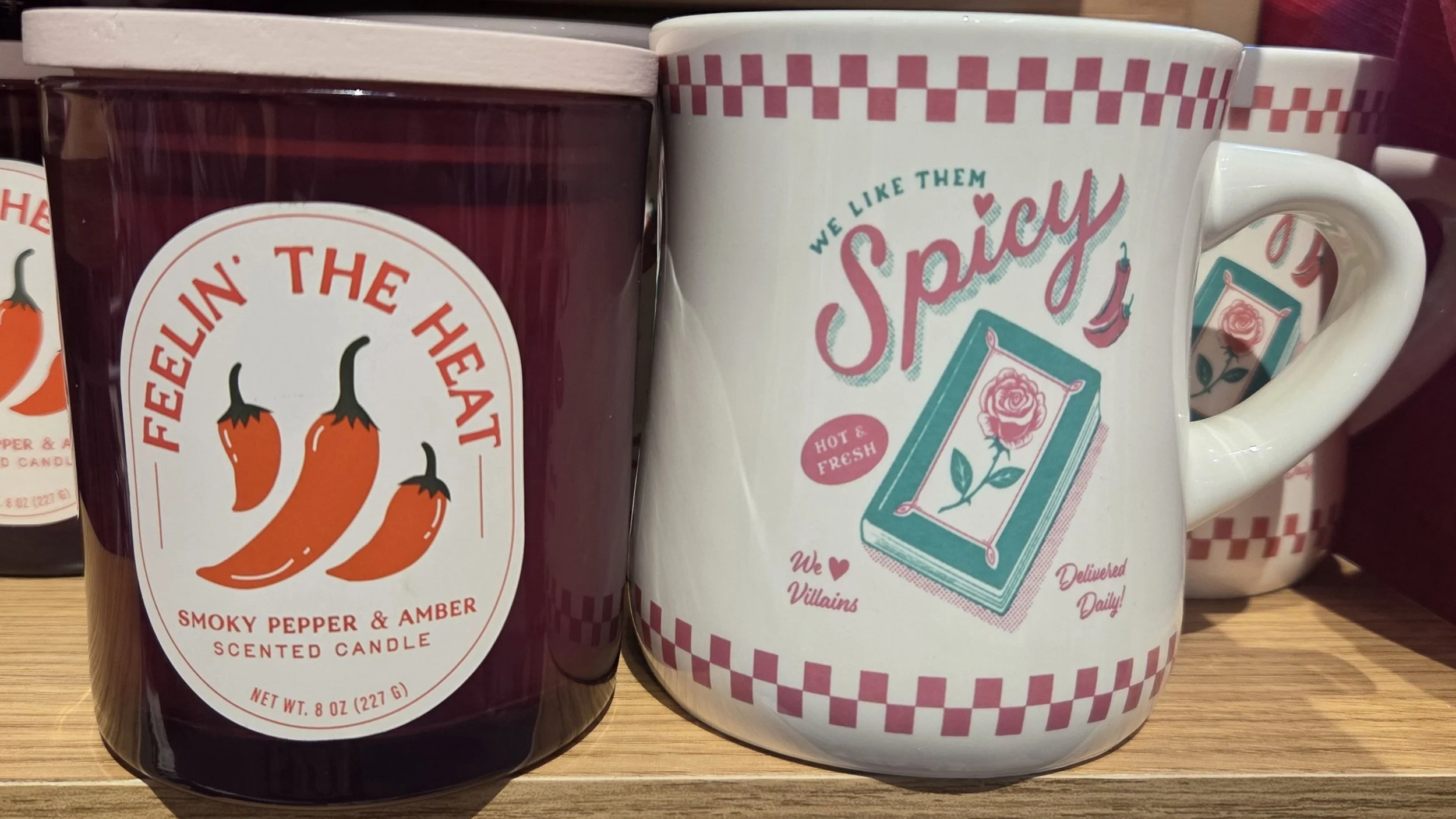
Barnes & Noble isn’t selling the same bookish decor as Michaels’ Next Chapter line, but it follows the same trends BookTok sets. If you walked into a Barnes & Noble before the COVID-19 pandemic, you likely wouldn’t have found a display with a “Feelin’ The Heat” scented candle and a “We like them Spicy” mug.
Every day, more bookish items are assimilated into a mainstream aesthetic, like items found in a library. Bookish lines like Next Chapter incorporate library cards and punch card designs in its products. It feels disingenuous to commercialize the aesthetic of a library when these establishments have always been non-commercial.
Are Retailers Considering Readers?
There is nothing wrong with liking bookish merchandise. I have a cup sleeve that reads “DRINK COFFEE & READ BOOKS.” But when we consume without thinking, we fill the pockets of corporations that don’t have our best interests at heart. Big retailers don’t care about the everyday reader and instead market to a popular trend.
Instead of shopping mainstream, consider shopping with an artist online or at a local event. If you want bookish goods, check out what your nearest independent bookstore has in stock.
There’s a difference when you purchase bookish goods from someone who not only handmakes the products, but is also part of the bookish community. Supporting independent artists and shops eliminates your participation in a money-hungry market and encourages engagement with community.